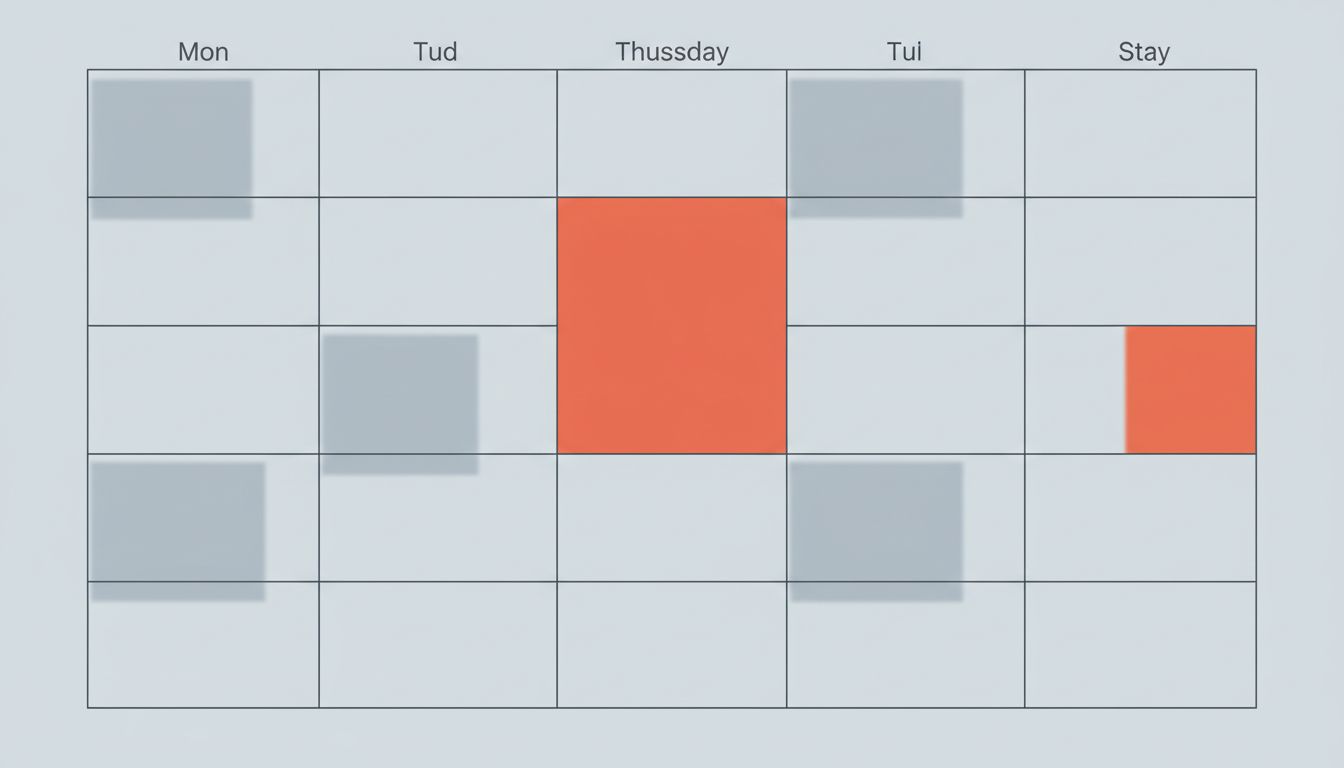

Most productivity advice treats meetings as a fixed cost, something to optimize around rather than eliminate. That framing is wrong. The meeting you canceled this morning didn’t just free up an hour. It probably did more useful work than the one you sat through.
Here’s why, broken down into the specific mechanisms that make absence more productive than attendance.
1. Cancellation Forces the Actual Decision-Maker to Decide
Many meetings exist because someone doesn’t want to make a call unilaterally. Scheduling a meeting is a way to diffuse responsibility across a group. When you cancel, or decline, or don’t show up, the person who called the meeting has to either make the decision themselves or admit it wasn’t actually a decision worth making.
This isn’t a cynical take. It’s a useful forcing function. If a meeting can be canceled and nothing stalls, the meeting was never load-bearing. The work it supposedly enabled was already going to happen. The only thing the meeting was really doing was providing cover.
2. The Preparation Work Gets Done Instead of Skipped
Here’s a pattern you’ve probably seen: a recurring weekly meeting where the agenda is the same every week, and nobody has looked at it. Everyone shows up, someone recaps last week, and forty minutes pass.
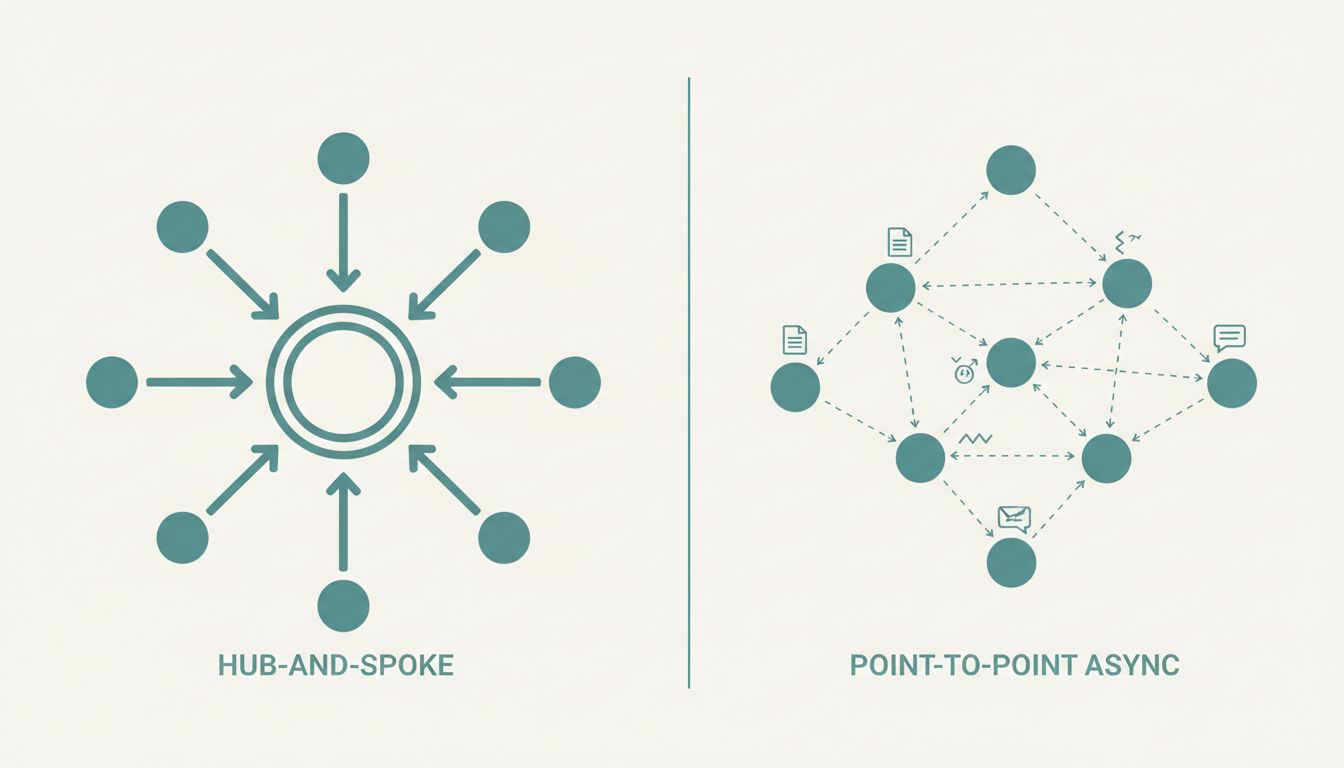
When that meeting gets canceled, something interesting happens. People who needed information from each other actually go find it. They write a quick message, check a shared doc, or pull a report. The information transfer that was supposedly happening in the meeting happens faster and with better fidelity, because it’s now specific and direct instead of broadcast to eight people who mostly don’t need it.
The prep work that meetings theoretically require but rarely produce? Cancellation triggers it. The need doesn’t go away, it just gets handled more efficiently.
3. You Signal That Async is Viable
Organizational culture is shaped by what people tolerate. If you attend every meeting you’re invited to, you’re voting for a culture where meetings are the default communication channel. When you cancel or decline and the work still gets done, you’re demonstrating something concrete: this could have been an email, and here’s the proof.
This matters especially for people earlier in their careers. They’re watching how senior contributors manage their time. If the people whose judgment they respect attend every sync, they assume that’s the standard. If they see someone cancel a meeting and then deliver good work anyway, it opens up the possibility that they can make similar choices.
You’re not just protecting your own time. You’re giving permission to everyone around you.
4. Focused Work Compounds in a Way That Meeting Hours Don’t
Paul Graham wrote about the distinction between maker schedules and manager schedules in 2009, and the framing still holds. A manager can take a meeting at 2pm and it costs them one hour. A programmer, writer, or designer who takes that same meeting loses not just the hour but often the hours on either side, because deep work requires a runway to reach the state where it’s actually productive.
The compounding nature of focused time is real. An hour of uninterrupted work on a hard problem isn’t worth one hour of meeting time, it’s worth three or four, because the meeting hour comes loaded with context-switching costs that don’t show up on the calendar. When you cancel a meeting, you’re not banking one hour. You might be recovering half a day.
If you want a framework for deciding what to attend, auditing the meetings you can’t cancel is a good starting point. The ones that feel unavoidable are often the ones most worth questioning.
5. The Alternatives People Find Are Usually Better
When a meeting disappears, teams find workarounds. A shared document with comment threads. A short Loom video explaining a decision. A Slack thread that captures the discussion and is searchable later. These aren’t just acceptable substitutes, they’re often superior. They create a record. They let people respond when they’re ready rather than when they happen to be free. They exclude people who don’t need to be included.
The friction of writing something down that you were going to say out loud is a feature, not a bug. It forces clarity. Half the confusion that gets “resolved” in meetings is confusion that could have been avoided if someone had written a clear brief in the first place. The meeting didn’t resolve the confusion, it papered over it until next week.
6. Absence Creates Accountability for Meeting Quality
If you always show up, there’s no feedback signal about whether the meeting was worth your time. Your attendance is a yes vote regardless of meeting quality. When you start canceling selectively, the people who run good meetings notice that you show up for them. The people who run bad meetings get a signal that something needs to change.
This is uncomfortable, and it requires enough seniority or relationship capital to pull off without burning bridges. But it’s accurate feedback in a domain that rarely gets any. Most meetings are never evaluated. They just recur until someone cancels the series.
You canceling isn’t rejection. It’s the only honest performance review the meeting was ever going to get.
What This Means for How You Schedule
Start treating meeting invitations the way you’d treat any other request on your time: with the assumption that the default answer is no unless there’s a clear reason for yes. Ask what outcome the meeting is trying to produce. Ask whether that outcome requires synchronous attendance. Ask who actually needs to be in the room versus who’s being included out of courtesy or habit.
The work doesn’t stop when you cancel. It often starts.