
The Meeting You Canceled Did More Work Than You Think
There’s a particular guilt that comes with canceling a recurring meeting. You feel like something won’t get done. Someone won’t be heard. A decision will slip. But after years of watching teams work, I’m convinced that guilt is mostly wrong. The canceled meeting frequently produces more than the one you attended.
Here’s why, and what’s actually happening in the gap.
1. Synchronous Meetings Consume More Time Than They Appear On the Calendar
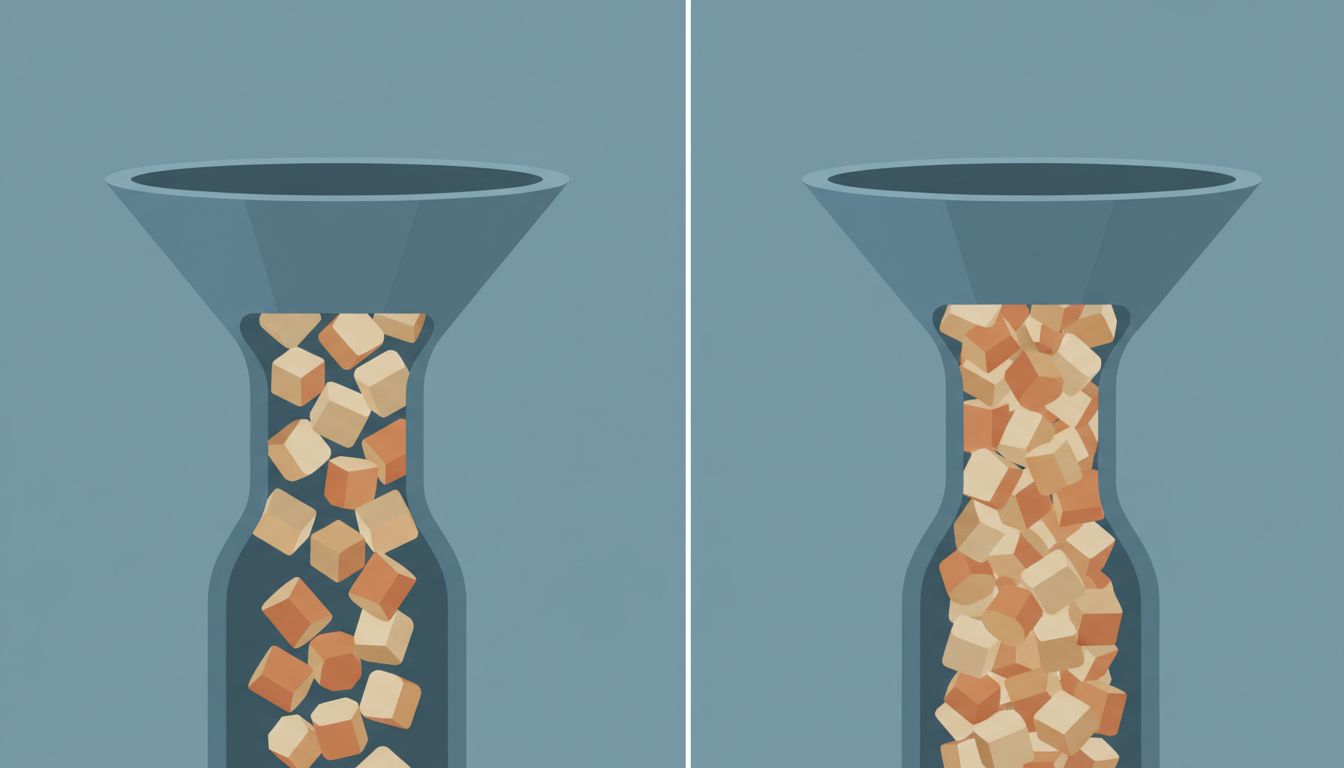
A one-hour meeting for six people isn’t one hour of work. It’s six hours of work, plus whatever each person spent preparing, plus the context-switching cost on either side of it. Context-switching isn’t free, and the research on recovery time is consistent: deep focus takes roughly 20 minutes to rebuild after an interruption. A 10am meeting doesn’t just cost the hour from 10 to 11. It shapes what’s possible at 9:40 and what’s available at 11:30.
When you cancel that meeting, you’re not giving each person an hour back. You’re potentially returning several hours of productive capacity to six people. That’s the arithmetic that most calendar apps hide from you.
2. Many “Alignment” Meetings Are Really Anxiety Management
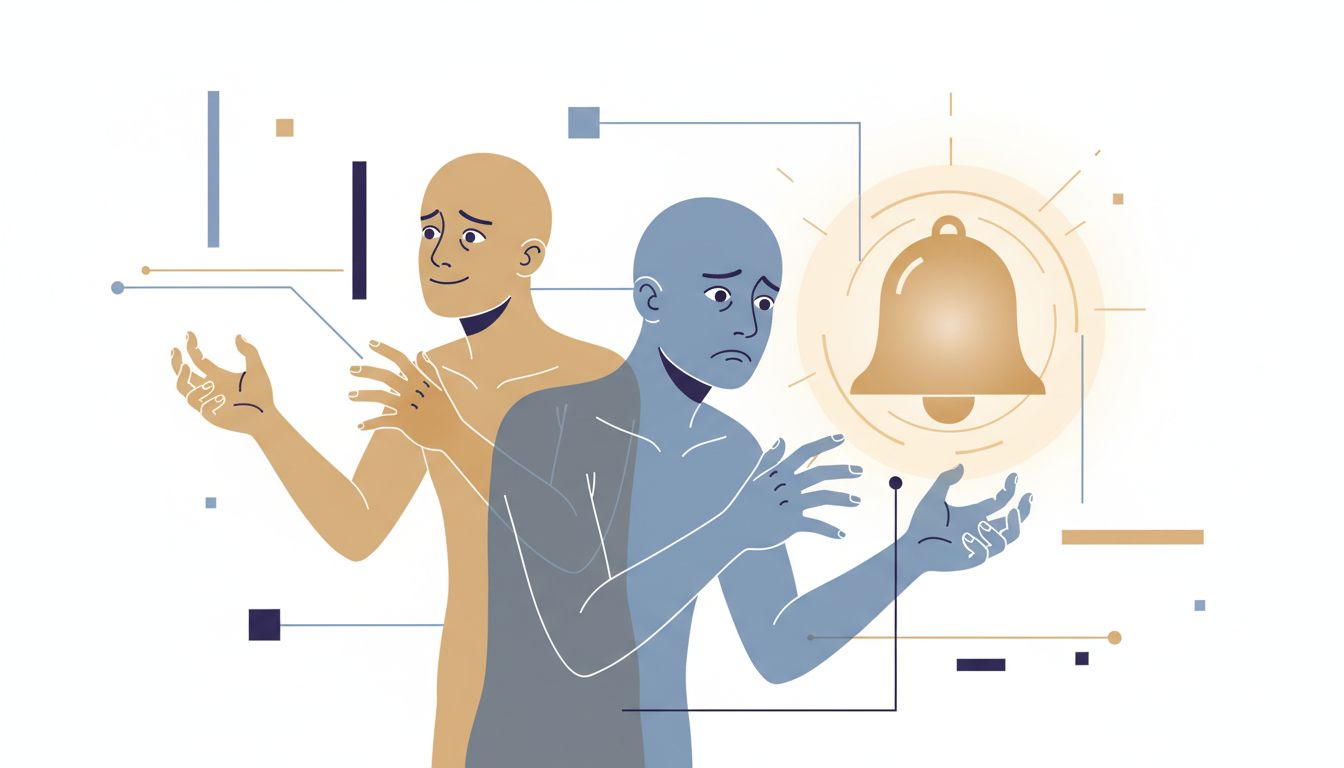
Pay attention to why meetings get scheduled in the first place. A lot of them exist because someone is anxious about whether things are on track, and getting everyone in a room (or a call) temporarily relieves that anxiety. The problem is that the meeting itself rarely resolves the underlying condition. You leave the sync feeling like you’ve done work, but you’ve mostly generated a shared feeling of being current.
This is different from actual decisions being made, blockers being removed, or work being completed. Anxiety management is a real organizational need, but it’s much cheaper to handle asynchronously. A short written update, a dashboard, a quick message thread, these satisfy the need without assembling a quorum.
3. Canceling Forces Clearer Communication
When a meeting disappears, the topics that would have been discussed don’t just evaporate. What happens instead is interesting: someone has to write them down. And writing forces a kind of clarity that verbal discussion rarely demands.
In a meeting, you can gesture at a problem, say “you know what I mean,” and get nods. In an async thread, you have to actually describe the problem, often discovering in the process that you didn’t fully understand it yourself. This is not a minor side effect. It’s one of the primary mechanisms by which distributed teams develop better shared understanding than co-located ones. The medium forces the thinking.
4. The Real Decisions Were Never Going to Happen In That Meeting Anyway
Most organizational decisions are made before the meeting, or after it, by the people with enough context and authority to actually decide. The meeting is often where the decision gets announced, or where preliminary reactions get gathered, or where everyone performs agreement. These are legitimate uses of group time, but they’re not the same as decisions being reached.
If the actual decision-making happens in a hallway conversation between two people, or in a document someone wrote the night before, or in a one-on-one between a manager and their lead, then the full-group meeting around that decision is mostly ceremony. Ceremony has its place, but it doesn’t need to be scheduled at 2pm on a Tuesday when everyone’s in the middle of something.
5. Silence In a Calendar Is Not the Same as Inactivity
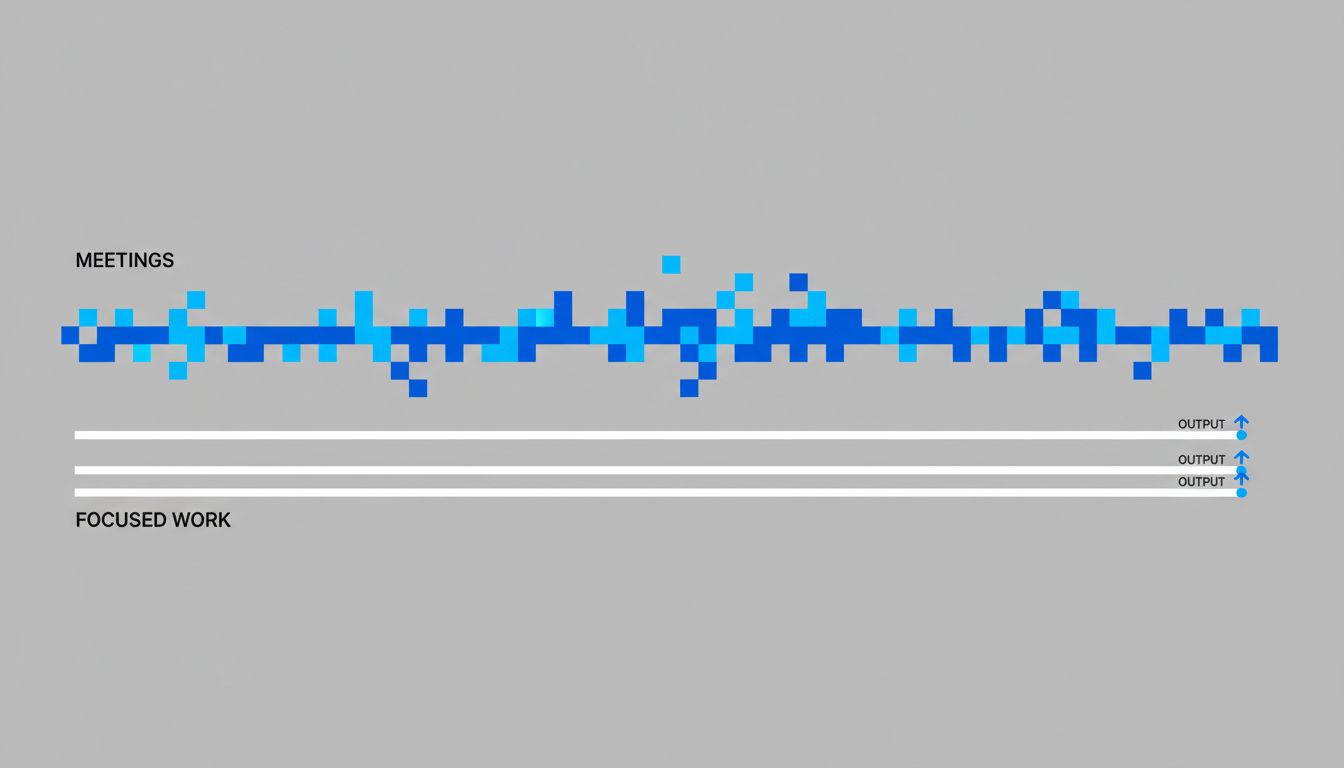
This is the core misunderstanding. When there’s no meeting, it reads visually as nothing happening. But “nothing” on a calendar is where most individual work actually lives. Thinking, writing, building, reviewing, the outputs that organizations run on are produced in blocks of uninterrupted time, not during discussions about them.
Knowledge workers in particular tend to produce their best outputs in states of focused attention that take time to enter and are fragile once established. A calendar dense with meetings is a calendar that’s systematically preventing that state from occurring. The meeting you canceled didn’t leave a vacuum. It left room for the work.
6. You Often Learn More From What People Do With Free Time Than From the Meeting Itself
This one is less obvious. When you cancel a recurring meeting, pay attention to what happens next. Some people will send a message with the update they would have given verbally. Some will finish the thing they were going to demo. Some will surface the problem through a different channel because it was genuinely urgent. And some will do nothing, which is itself useful data: the meeting may have been the only forcing function for certain people to report in, which suggests the meeting was substituting for something else that needs fixing.
What fills the absence tells you what the meeting was actually doing. Sometimes it was doing something real and you should restore it. But often the work just happens anyway, without the overhead.
7. The Meetings Worth Keeping Have Clear Answers to Three Questions
Before scheduling or keeping a recurring meeting, it’s worth asking: what decision or output requires synchronous conversation to produce? Who specifically needs to be present for that? And what will be visibly different after this meeting compared to before it?
If those questions produce vague answers (“staying aligned,” “touching base,” “making sure everyone’s on the same page”), the meeting is probably doing the anxiety management job described earlier, not the decision-making job. That doesn’t automatically make it worthless, but it should make it shorter, less frequent, or replaced with something cheaper.
The meetings that consistently survive this test tend to be small (two to four people), time-bound, and oriented around a specific artifact: a doc to review, a decision to make, a plan to pressure-test. They have a before and an after. Everything else deserves a long look at whether it earns its slot.