

First-mover advantage is one of the most durable myths in technology business. Founders repeat it, investors fund around it, and strategists cite it as justification for rushing products to market before they’re ready. The problem is that the historical record largely contradicts it. The second company to enter a market, when it arrives with a clear-eyed read of what the pioneer got wrong, wins more often than not.
This isn’t a lucky pattern. It’s structural.
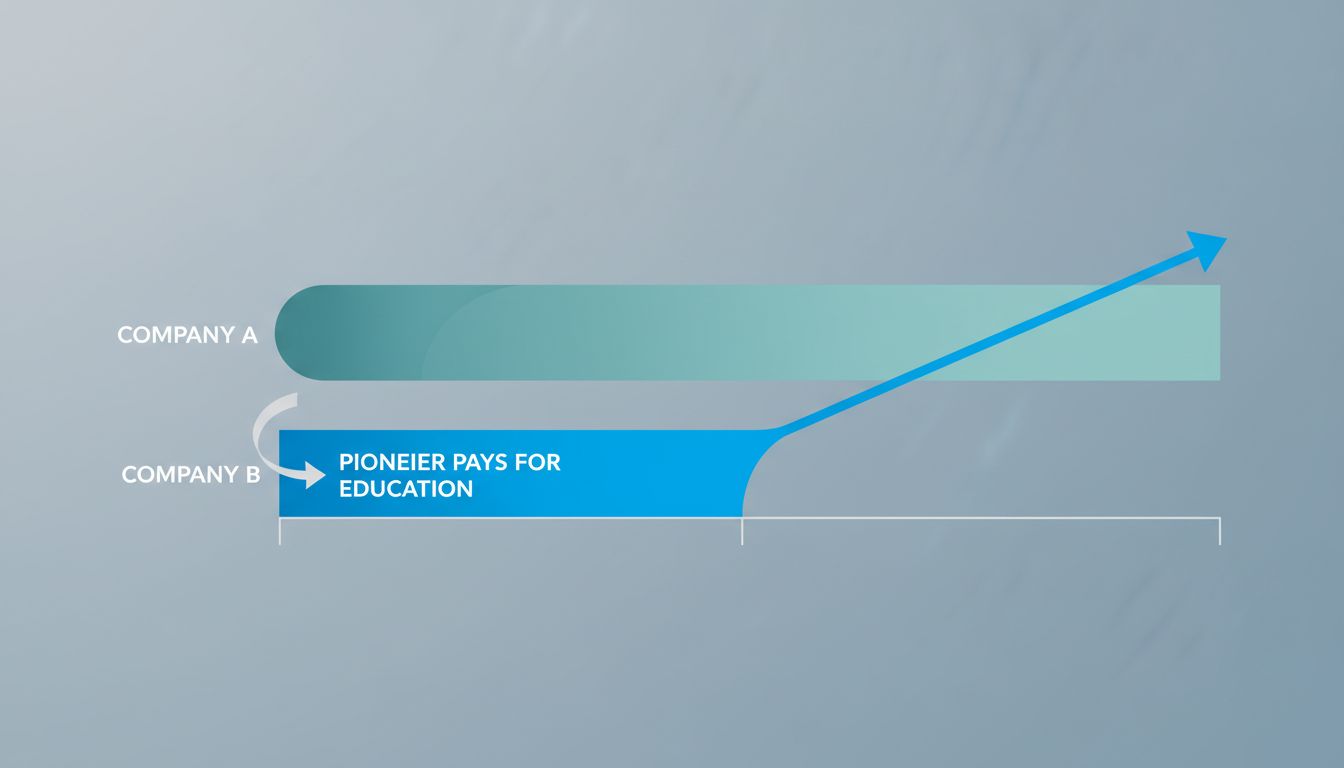
The pioneer pays for your education
The first company into a market has to answer questions no one has answered before. Who is the actual customer? What do they need badly enough to change behavior for? What does the sales cycle look like? What are the unit economics when you’re not operating on assumptions?
All of that learning is expensive. It comes from failed campaigns, churned customers, and products built for a market that turned out to be slightly different from the imagined one. By the time a pioneer has figured it out, they’ve also accumulated the organizational debt that comes with figuring it out: legacy pricing models, early customers with sweetheart contracts, engineering decisions made under uncertainty.
The second entrant gets that education for free. They watch, they read the press coverage, they talk to frustrated customers. They enter with a sharper hypothesis and less technical debt.
Timing and technology curves compound the advantage
Markets rarely become large the moment someone enters them. They grow over years, and the infrastructure that makes growth possible, cloud computing, mobile distribution, payment rails, developer tooling, improves over the same period. A company that arrives two or three years after the pioneer often has access to better raw materials at lower cost.
MySQL and PostgreSQL were available and mature by the time many SaaS companies were being built. AWS existed and was reliable by the time the second wave of cloud-native startups launched. The first entrant often had to build its own version of what later became a commodity. That custom infrastructure, built with real engineering hours and real capital, became a liability once the commodity version arrived.
Customers who tried the first product are ready for yours
There’s a customer segment that is actually easier to sell to than a cold prospect: someone who bought the first version of a product, found it insufficient, and is actively looking for something better. They’ve already convinced themselves the category is real. They’ve already educated their organization on why the budget is worth spending. They just want the product to actually work.
Salesforce had this with Siebel’s frustrated customers. Google had it with users who had tried earlier search engines and found them cluttered and slow. The pioneer does the hardest work in sales, which is not closing the deal but creating the category in the buyer’s mind. The second entrant gets to harvest that.
As research on why runners-up in tech often profit more suggests, being second in a market isn’t the consolation prize. It’s often the better strategic position.
Focus is easier when you know what to focus on
The pioneer faces a blank canvas, which sounds like an advantage but creates a real allocation problem. Which features matter? Which customer segments do you pursue first? What’s the right price? Every decision is made without data.
The second entrant can read the pioneer’s product and make educated guesses about which features customers actually use versus which were built because someone thought they were clever. They can look at where the pioneer’s NPS breaks down, where the complaints cluster, what the churned customers say. This produces a more focused initial product. And focused products, as a rule, beat comprehensive ones in early adoption.
This dynamic is part of why the fastest-scaling startups often refused to scale first. Waiting gives you data. Data produces focus. Focus produces speed.
The counterargument
The obvious objection is that some first movers did win, and they won decisively. Amazon in e-commerce. eBay in online auctions for most of its dominant years. These cases are real.
But look carefully at what made them stick. In most durable first-mover wins, the pioneer captured a switching-cost advantage before a serious second entrant arrived: network effects, proprietary data, long-term contracts, or physical infrastructure that was genuinely hard to replicate. The pioneer won not because they were first but because they used their time in the market to build something that made switching expensive.
When that window wasn’t used well, or when the second entrant arrived before the switching costs were locked in, the pioneer lost. Myspace had years of head start on Facebook. Friendster preceded both. Alta Vista was doing search before Google. Being first gave each of them time, but time alone wasn’t enough.
The strategic conclusion
The lesson here isn’t that you should wait and copy. It’s that the urgency to be first is frequently miscalibrated. Founders and investors overweight the value of the first-mover timestamp and underweight the value of entering with precision, better technology, and a market that’s already been educated.
If you’re first into a market, the question isn’t how to protect your lead. It’s how quickly you can build the switching costs that make your head start matter. If you’re second, the question isn’t how to catch up. It’s how to make the pioneer’s work benefit you without inheriting their mistakes.
The company that enters second with a clear view of what went wrong before it will outperform the pioneer most of the time. The history of technology is full of the evidence. The myth of first-mover advantage persists anyway, mostly because “we got there first” makes for a better founding story than “we watched carefully and learned from someone else’s expensive mistakes.”