
Most developers who complain about LLM outputs spend their energy rewriting prompts. They add more context, more constraints, more examples. Sometimes it helps. Often it doesn’t. The real problem is almost never the prompt itself, it’s the underlying model of what the model is actually doing.
This isn’t a criticism of prompt engineering as a practice. Prompt structure matters. But treating it as the primary lever means you’re tuning a parameter in a system you don’t fully understand, and that’s a losing strategy no matter how good your prompts get.
You’re Probably Thinking of It as a Search Engine or a Compiler
Developers tend to map new tools onto existing mental models. That’s efficient and usually correct. LLMs, though, break most of the analogies.
The search engine model says: give it a well-formed query and it retrieves the right answer from somewhere. The problem is that LLMs don’t retrieve. They generate. The output is a probabilistic continuation of your input, shaped by patterns in training data, not a lookup against a knowledge base. When you ask a model what the capital of France is, it doesn’t check a table, it generates a token sequence that fits the pattern of how that question gets answered in text it has seen. The answer happens to be reliable because that pattern is extremely consistent in training data. Ask something that isn’t, and the generation follows the pattern of sounding confident even when the underlying pattern is weak or absent.
The compiler model is subtler but just as misleading. It says: if I specify my intent precisely enough, I’ll get the output I want. This works in programming because a compiler has a formal grammar and deterministic execution. An LLM has neither. Precision helps, but there’s no formal contract between input and output. You can write the most perfectly specified prompt in existence and still get a response that technically satisfies every constraint while missing the point entirely. This happens constantly. Why the Same LLM Prompt Fails the Second Time covers the mechanical side of this, but the root cause is expecting deterministic behavior from a stochastic system.
The Model Has No Goal. It Has Inertia.
This is the mental model shift that changes everything: an LLM isn’t trying to help you. It isn’t trying to do anything. It’s a very large function that maps input tokens to output tokens according to learned probability distributions. The appearance of goal-directed behavior is a consequence of training on human-generated text, where the authors did have goals.
When you understand this, a lot of mysterious behavior becomes predictable. Why does the model confidently state something false? Because the pattern of confident assertion was present in the training data in contexts where it was rewarded (either by the original authors or by RLHF). Why does it lose track of a constraint you stated at the beginning of a long prompt? Because the attention mechanism (the part of the architecture that tracks relationships between tokens) has limits, and distant context competes with recent context in ways that aren’t uniform.
What an LLM Actually Does Between Prompt and Reply gets into the mechanics if you want the full picture. The key practical implication is this: you should design your prompts around the model’s actual computational structure, not around what you wish it were doing. Putting critical constraints at the end of a prompt, right before the expected output, is not a style choice. It’s an architectural decision based on how token prediction actually works.

Context Isn’t Just Background. It’s the Whole Input.
Here’s a useful reframe: from the model’s perspective, there is no distinction between your instruction, your examples, and your data. It’s all tokens. The model doesn’t have a special “instruction register” that holds your command while it processes the data. Everything in the context window is just… context. The relative weight of different parts of that context is influenced by position, repetition, phrasing, and a dozen other factors.
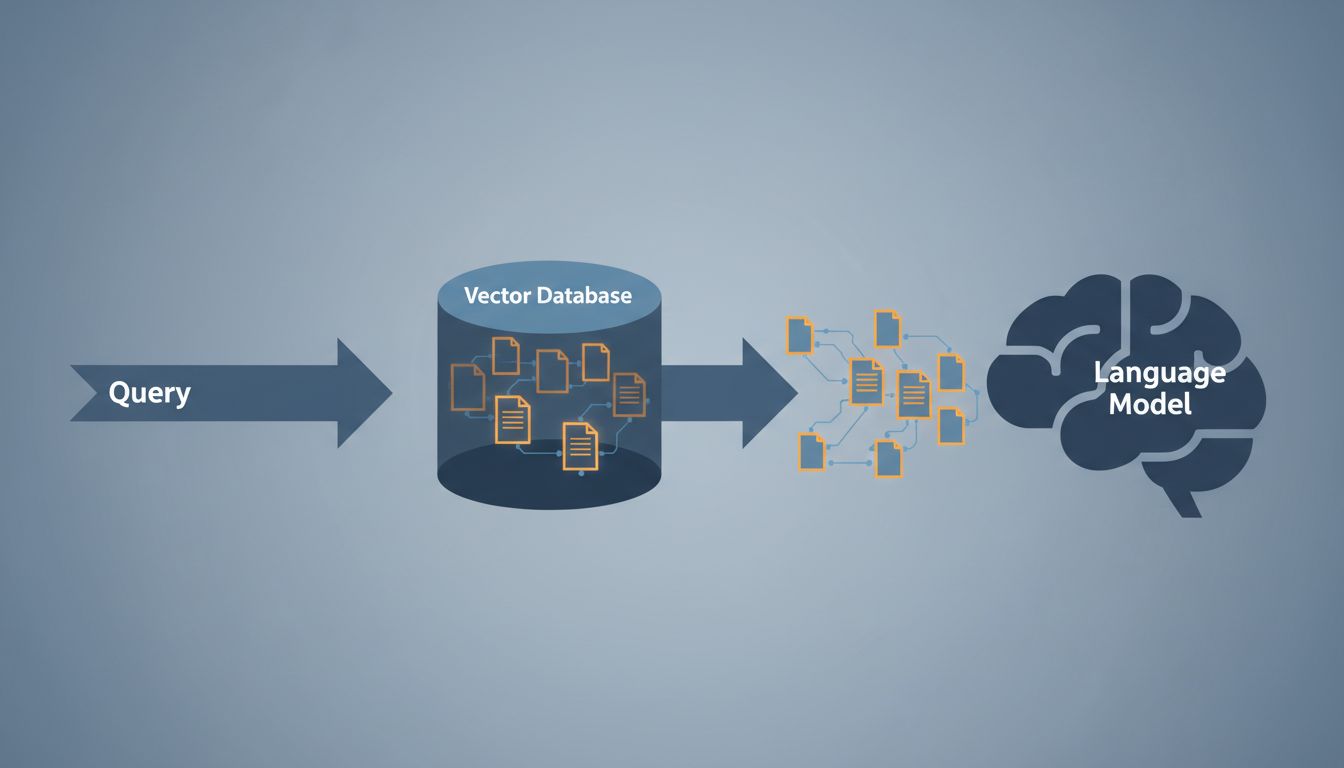
This matters a lot for common patterns like retrieval-augmented generation (RAG, where you stuff relevant documents into the prompt and ask the model to answer based on them). Developers often treat the pasted documents as data and their question as the instruction. The model treats them as one long input. If your question is a single sentence and the documents are three pages, the proportional weight of your actual intent in the full context is tiny. You need to actively reinforce it, restate the goal after the documents, use phrasing that pattern-matches to authoritative instruction, and explicitly tell the model to disregard contradictions in the source material if you want it to.
The same logic applies to few-shot examples (showing the model example input-output pairs before your actual request). Those examples aren’t just hints. They’re demonstrating a probability distribution. If your examples are inconsistent, you’re training the generation on inconsistency. If they don’t actually match the format you want for your real case, you’re pulling the output in the wrong direction.
Calibration Matters More Than Cleverness
The developers who get the most out of LLMs aren’t the ones with the cleverest prompts. They’re the ones with calibrated expectations about what a given model can and can’t do, and they structure their use cases around that calibration rather than fighting it.
Concretely, this means knowing which tasks are high-reliability for a given model (summarization, reformatting, code generation in common languages, extracting structured data from text) and which are low-reliability (complex multi-step reasoning, tasks requiring knowledge of recent events, anything where the training distribution is sparse or where confident-sounding wrong answers are hard to catch). For low-reliability tasks, no amount of prompt engineering rescues you. You need either a different architecture (tool use, chain-of-thought decomposition, external verification) or a different task.
This is the same thinking you’d apply to any component with known failure modes. You wouldn’t ask a database to do heavy computation and then complain when query times explode. You’d push the computation to the application layer. You’re Paying for Tokens, Not Thinking makes a related point about where the real work happens in an LLM pipeline. The same engineering instinct applies: understand your component’s actual strengths, design around its actual weaknesses, and stop being surprised when it behaves like what it is.
Fix the Model, Then Fix the Prompt
None of this means prompts don’t matter. They do. But prompt iteration on top of a broken mental model is how you spend two hours getting marginally better outputs from a fundamentally mismatched architecture.
The sequence that actually works: figure out what the model is, not what you wish it were. Understand which parts of your task it handles reliably. Design your system so those parts go to the model and the rest goes somewhere else. Then write prompts that communicate with the model’s actual structure, paying attention to position, repetition, and the way your examples shape the output distribution. That’s not prompt engineering as mysticism. It’s prompt engineering as applied knowledge of the system.
When you get a bad output, the first question shouldn’t be “how do I reword this?” It should be “is this even a task this model handles well, and am I communicating in a way that matches how it processes input?” Those questions cut the debugging loop down substantially. They also make you a lot harder to frustrate.