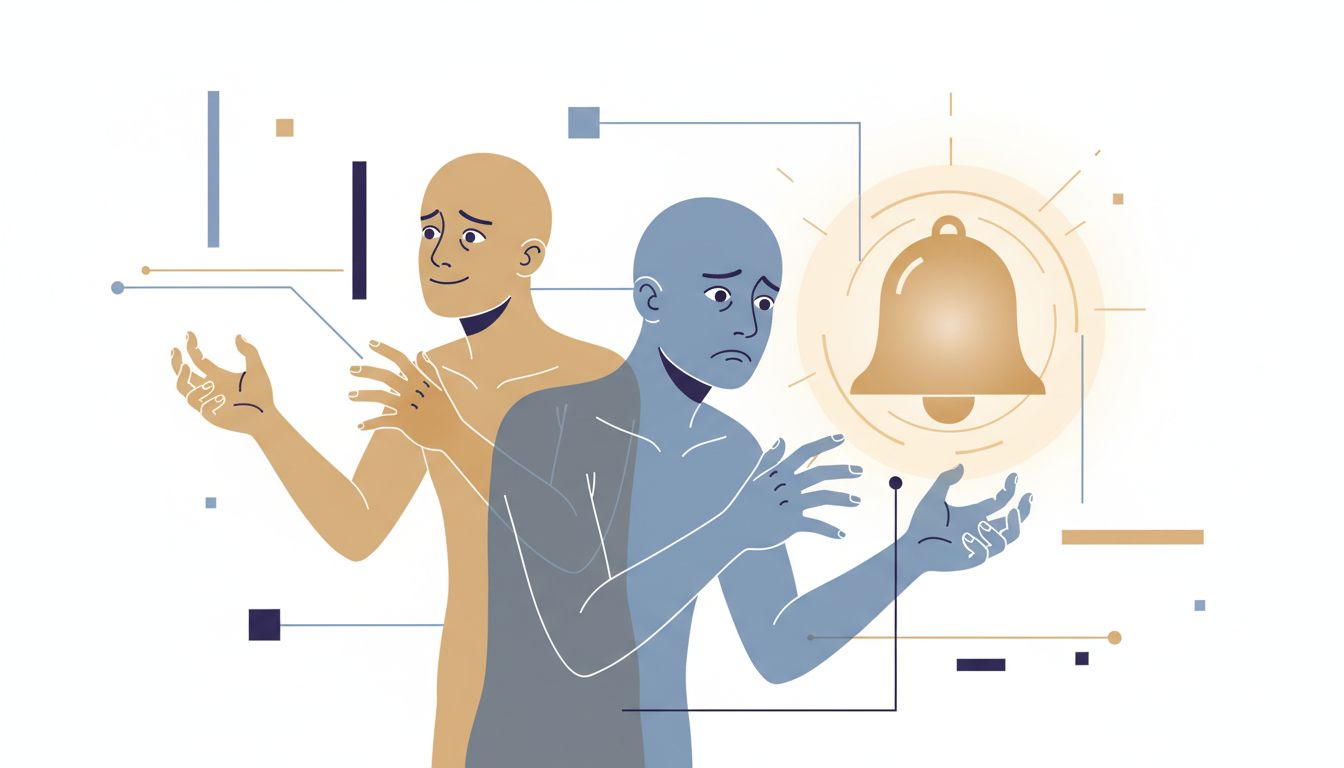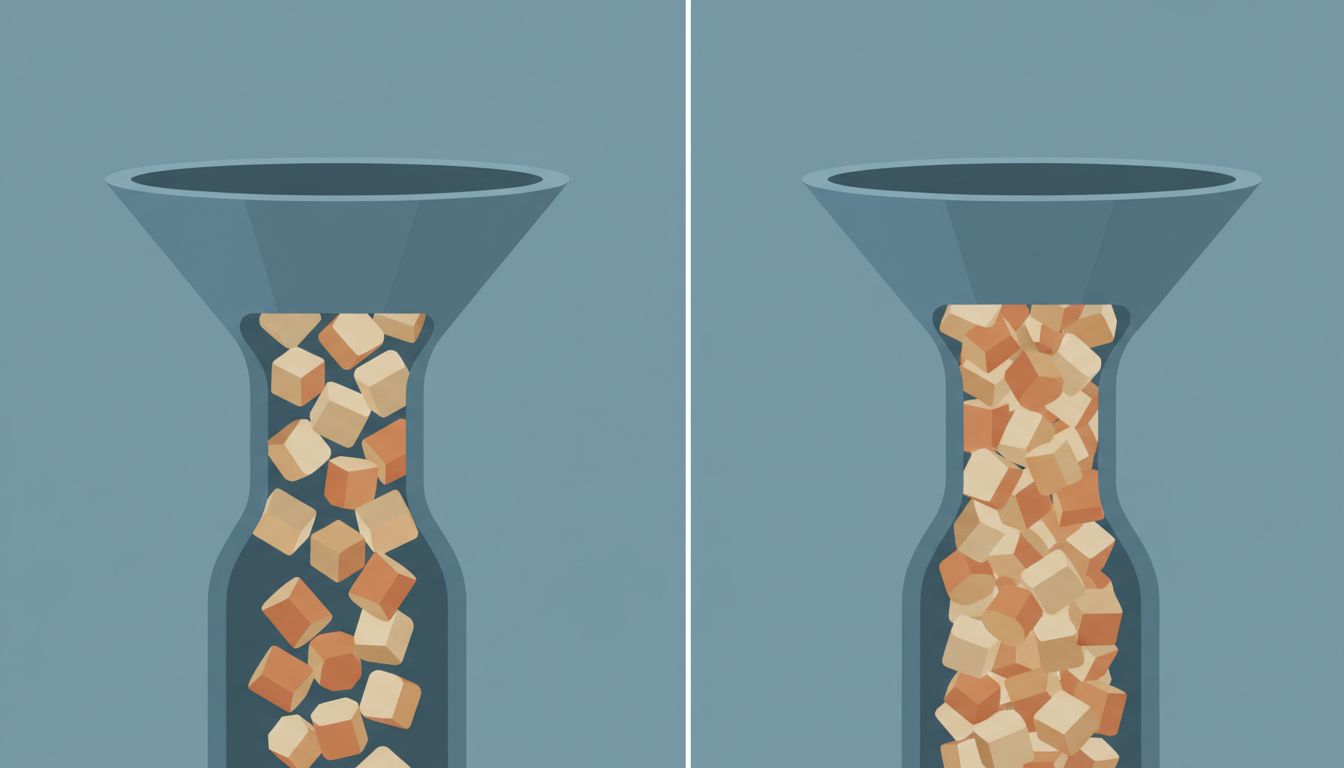
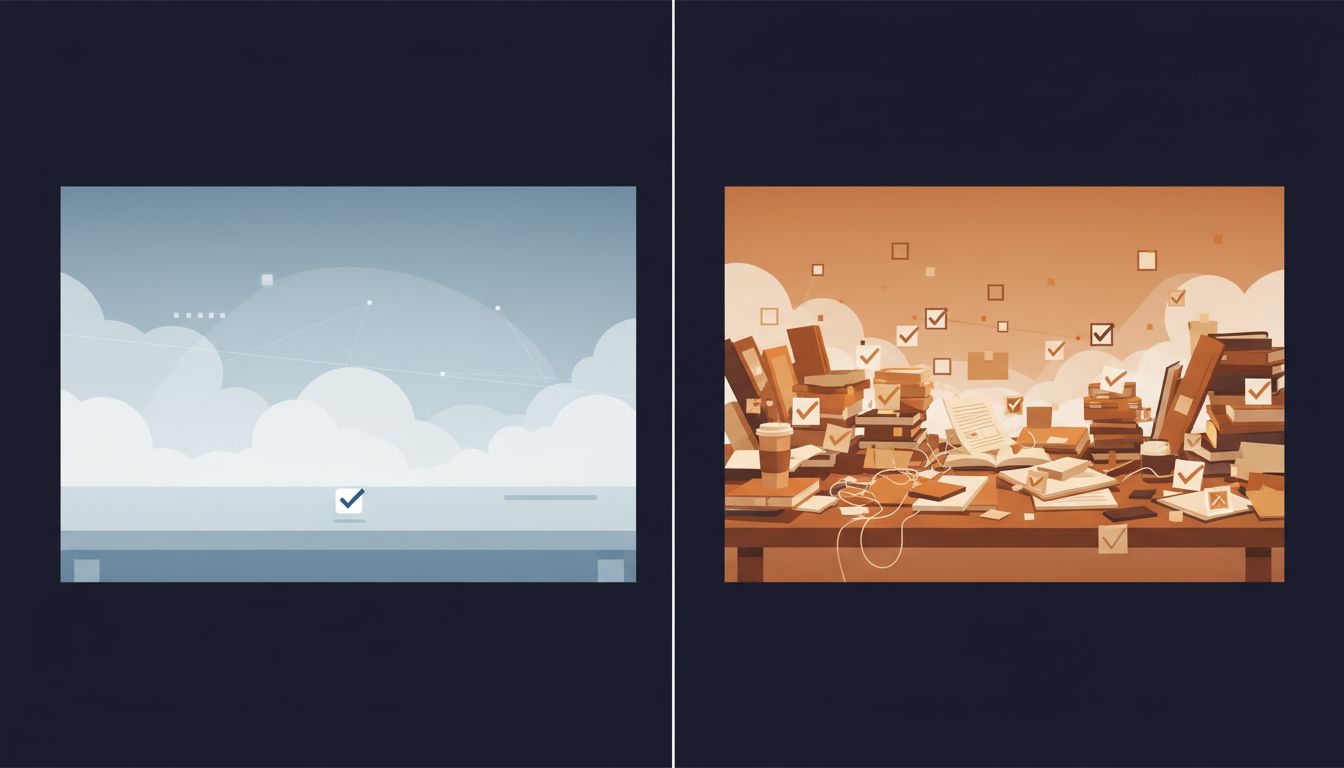
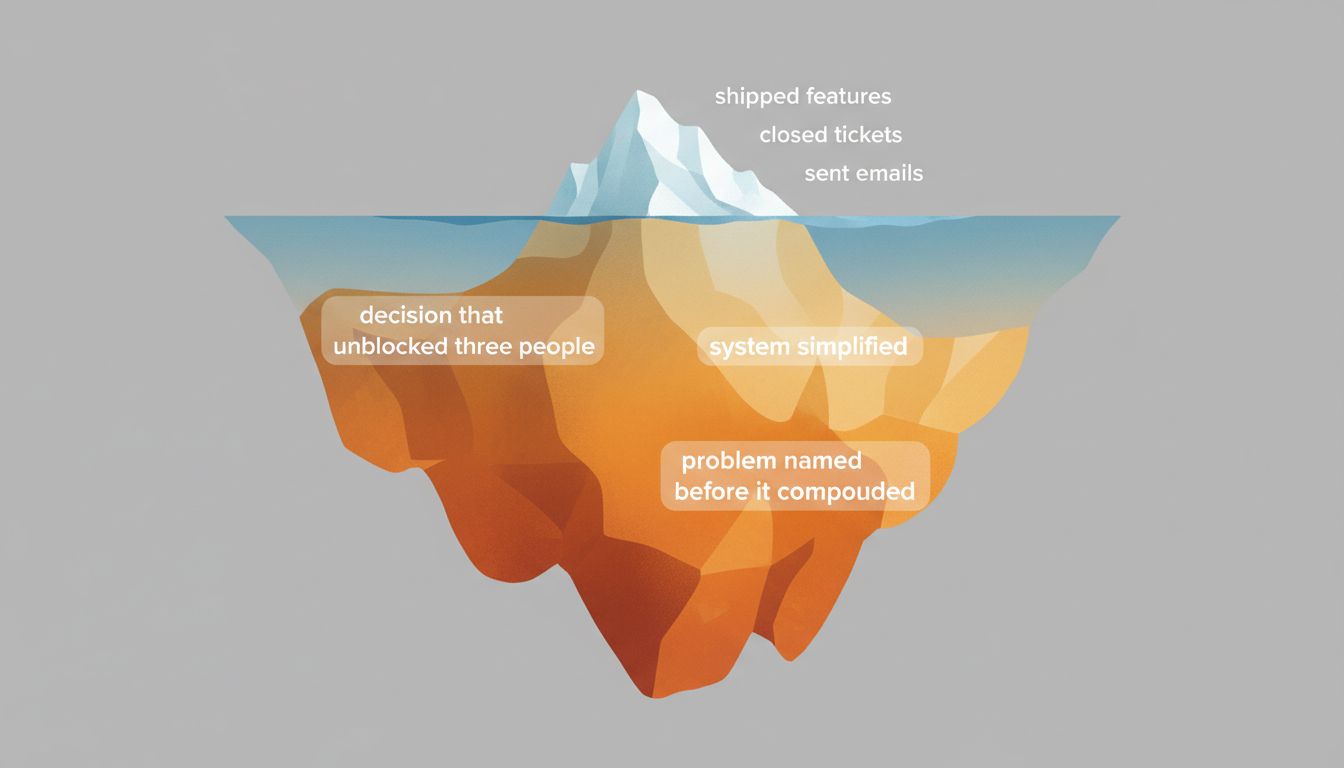
There’s a specific kind of exhaustion that comes at the end of a day where you closed no tickets, sent no announcements, shipped no features, and yet made a decision that will save your team three months of rework. You sit there with nothing to show. The task management app has the same number of open items it had this morning. You feel vaguely guilty.
This is not a personal failure. It’s a measurement problem, and it’s worth taking seriously.
Output and Outcome Are Not the Same Thing
Most productivity systems, from simple to-do lists to sophisticated OKR frameworks, are built around counting completed units. Tickets closed. Emails answered. Features shipped. This works reasonably well for work that is primarily mechanical, where the correlation between effort and visible output is tight. It falls apart for knowledge work, where the most valuable thing you can do on a given day might be to spend two hours thinking through a problem and then delete a week’s worth of someone else’s half-finished code.
The distinction that matters is the difference between output (what you produced) and outcome (what changed because of what you did). A day spent writing a twenty-page spec is high-output. A thirty-minute conversation that makes that spec unnecessary is high-outcome. Only one of those feels productive by the metrics most people use.
This is part of why engineers who write less code are often worth more. The senior person who talks you out of building the wrong abstraction leaves no artifact. The junior who builds it does.
The Cognitive Work That Leaves No Trace
Knowledge work has a category of activity that researchers sometimes call “invisible work,” meaning work that is essential to the outcome but generates no observable artifact. Reviewing a proposal and deciding it’s sound. Recognizing that two teams are about to duplicate effort and making a quick introduction. Reading a technical paper that reframes how you’ll approach a problem next week.
None of that shows up on a dashboard. None of it gets checked off a list. And because it doesn’t, there’s pressure, internal and external, to deprioritize it in favor of things that do generate a visible artifact. This is exactly backwards. The invisible work is often where compounding returns live.
Think about how software systems actually improve over time. It’s rarely through heroic bursts of shipping. It’s through accumulated small decisions that each trim a little technical debt, close a little misalignment between teams, reduce a little friction. Each one individually looks like almost nothing. The engineer who consistently makes them looks unproductive by ticket count and ends up being the person everyone else depends on.
Why We Confuse Busyness for Progress
The brain has a well-documented preference for closure. Completing a task, any task, produces a small dopamine signal. This is why it’s genuinely satisfying to answer email, update a status doc, or close tickets that have been sitting open for a while. These activities feel good. They create a visible record of activity. And they are often much less important than the ambiguous, difficult, slow cognitive work that doesn’t generate that same signal.
Zeigarnik effect is relevant here. This is the psychological phenomenon where unfinished tasks occupy more mental bandwidth than finished ones. The result is that the hard, open-ended work that doesn’t resolve into a clean checkbox tends to feel worse to carry around, even when it’s the work that matters most. We unconsciously route toward completion over importance.
Productivity culture, especially in tech, has made this worse by gamifying output. Commit streaks, velocity metrics, points per sprint. These instruments are useful for surfacing patterns at scale but deeply misleading when applied to individual days. When you measure the wrong thing carefully, you get really good at the wrong thing.
What High-Leverage Days Actually Look Like
Here’s a rough taxonomy of the most high-leverage things a knowledge worker can do on a given day, roughly ordered by how invisible they are:
Making a decision that unblocks multiple people. Recognizing and naming a problem that no one else has articulated yet. Simplifying a system so there’s less to maintain. Learning something that changes your mental model of a problem domain. Saying no to something that would have consumed disproportionate resources.
Notice that none of these produce a satisfying artifact by default. The decision might get recorded in a brief document if someone is diligent. The problem-naming might happen in a conversation. The simplification leaves negative space where complexity used to be. You cannot easily point at any of these and say “here is what I did today.”
If you work in an environment where you’re expected to demonstrate daily productivity, this creates real pressure to fill your calendar and task list with things that do produce artifacts, even when the high-leverage work doesn’t. That pressure compounds over time into a culture where people are optimized for looking productive rather than being productive. The meetings that get scheduled to avoid decisions are a symptom of exactly this.
How to Calibrate What a Good Day Actually Means
The practical fix is to track outcomes alongside outputs, and to give yourself explicit credit for the invisible work.
One approach: at the end of each day, write one sentence answering “what is easier or better tomorrow because of what I did today?” This forces the outcome framing. Some days the answer is “the API design won’t have a race condition because I spent two hours thinking about state transitions.” That’s a good day, even if the commit history is empty.
A second approach: distinguish between maintenance productivity (keeping existing things running) and generative productivity (creating new value or preventing future costs). Most days involve both. A day dominated by maintenance can feel hollow even when it was necessary. Naming that distinction helps calibrate your expectations without either beating yourself up for low output or convincing yourself that any activity equals progress.
The deeper shift is accepting that your most important work will often be invisible by default, and that making it visible requires a little deliberate documentation, not of the activity but of the impact. “Reviewed the caching strategy and confirmed we don’t need to change it” is worth writing down. Not because it demonstrates effort, but because future-you (and your team) will want to know that someone looked at this and it was a considered decision, not an oversight.
The days that feel empty are often the ones doing the most work. The goal is to stop penalizing yourself for that, and to stop building systems that penalize others for it either.