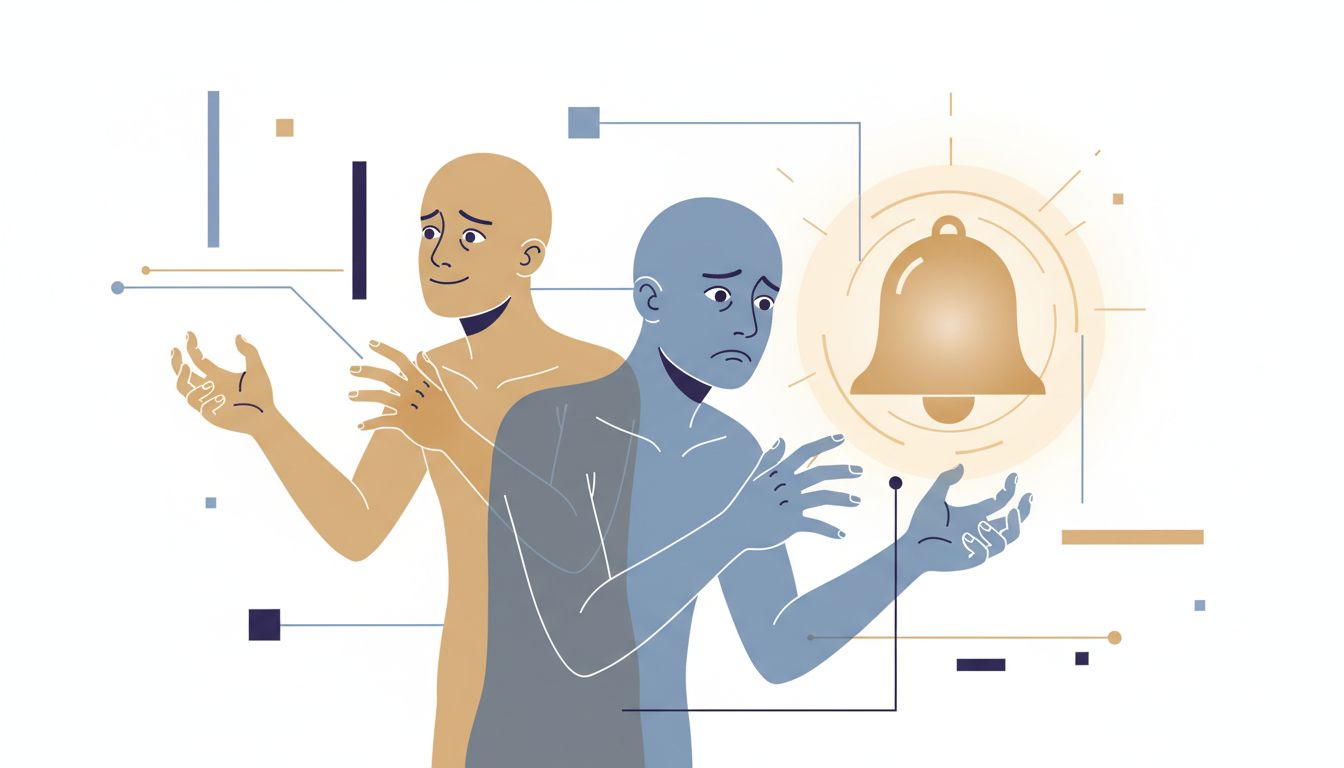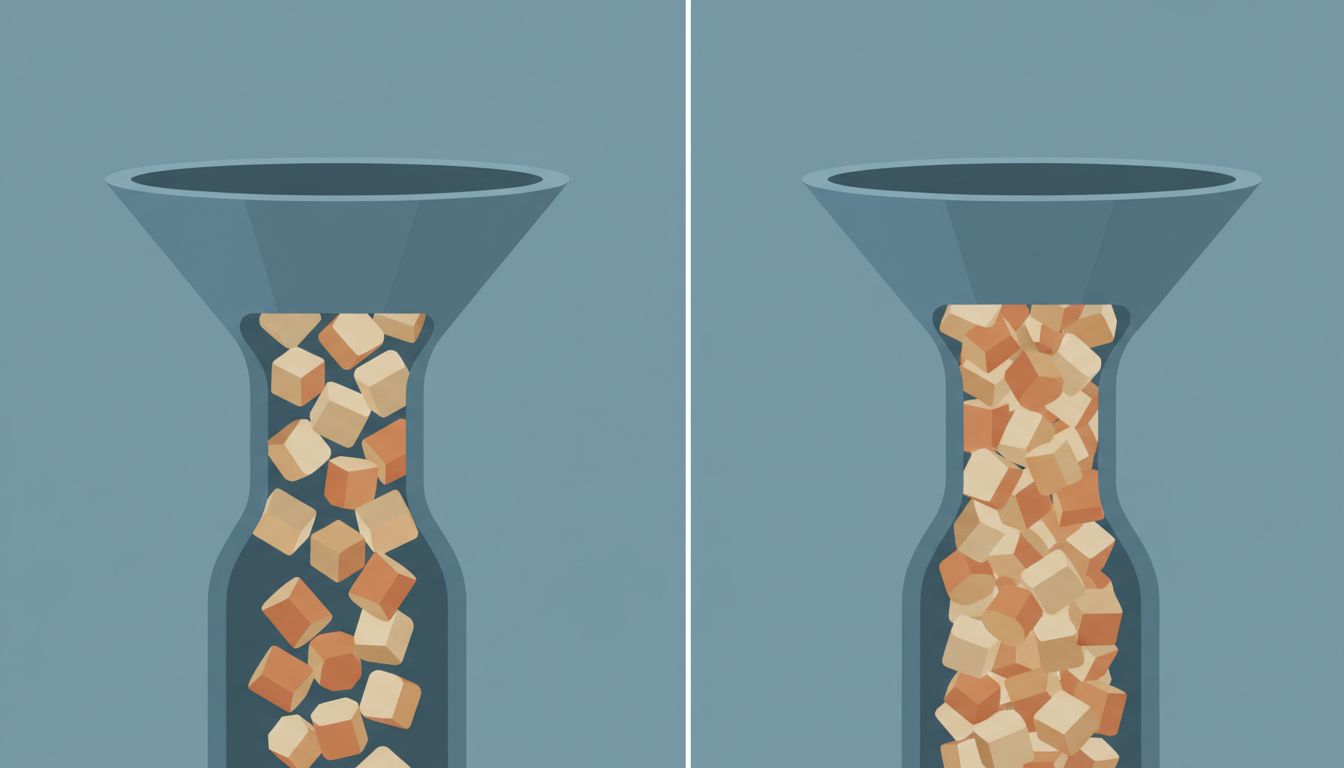
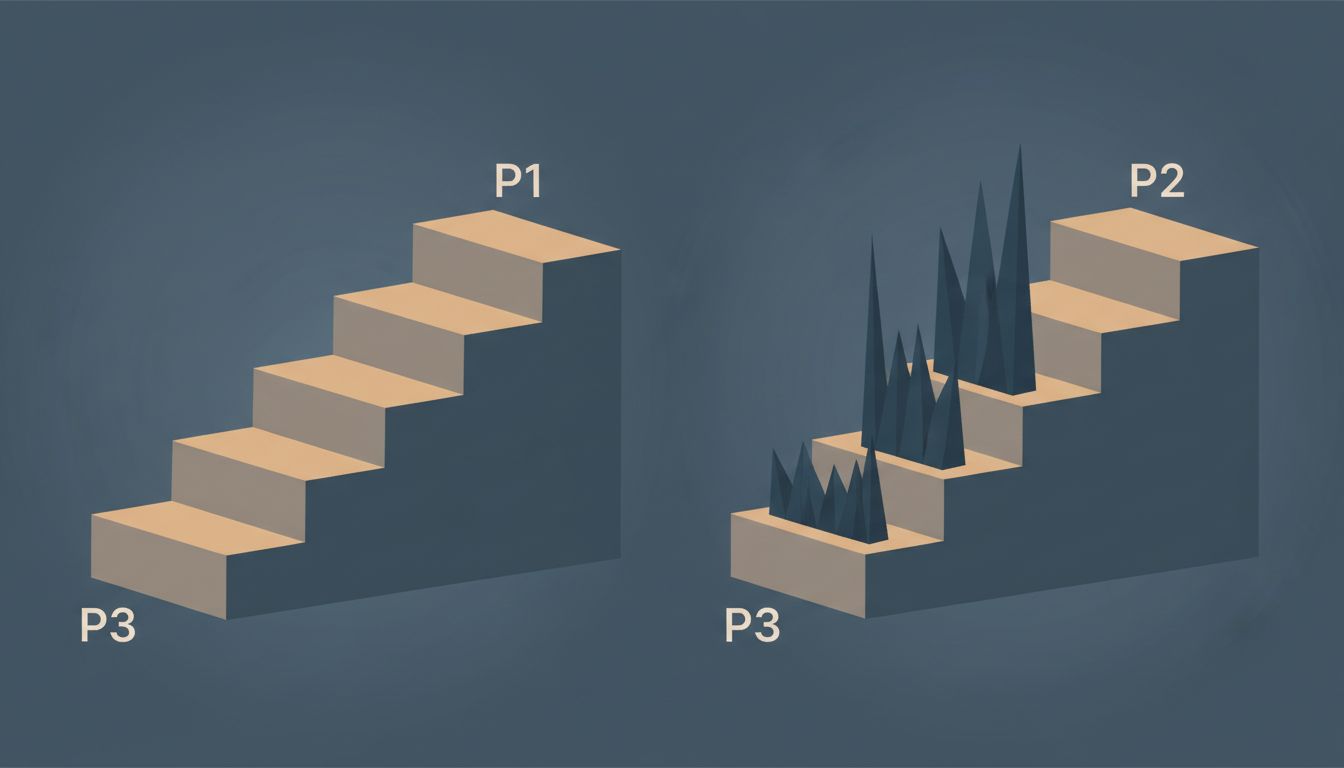
Most to-do systems sort tasks by priority. High, medium, low. P1, P2, P3. Urgent/important quadrants borrowed from Eisenhower. The logic seems airtight: do the most important thing first, work your way down. The problem is that this sorting key describes what the task is worth, not what it costs to start. And cost-to-start is almost always what determines whether a task gets done.
This isn’t a motivation problem or a discipline problem. It’s a data structure problem. You’re indexing on the wrong field.
The Hidden Dimension of Every Task
Every task has at least two meaningful attributes: its value (what completing it gets you) and its activation energy (what it costs to even begin). Priority systems capture value reasonably well. They almost never capture activation energy at all.
Activation energy, borrowed from chemistry, describes the initial energy required to start a reaction before it can proceed and release its own energy. In task terms, it’s the mental and logistical friction between “not doing the thing” and “actually doing the thing.” Filing your taxes is high-value and high-activation. Responding to a Slack message is low-value and near-zero activation. A priority list puts the taxes above the Slack message, but your brain will route around the taxes every time.
This is why your P1 items age. They’re not deprioritized, exactly. They’re stranded at a high activation energy state with no push to get over the hump.
Why Priority Feels Right but Performs Poorly
Priority ranking maps cleanly to how we think about work in the abstract. In a planning meeting, you want to talk about what matters most. Priority is the right language there. But execution isn’t planning. Execution happens in moments scattered throughout the day, often with inconsistent energy, fragmented attention, and unclear context.
When you open your task list to decide what to do next, you’re not doing strategic planning. You’re making a micro-decision under cognitive load, usually with partial information about how much energy you actually have. Sorting by priority forces that micro-decision to be “am I currently capable of doing the hardest important thing?” The answer is frequently no, so you scroll, you delay, you check email.
The system fails not because the priority ranking is wrong but because it asks you to make the same high-friction choice every single time you consult it.
What Activation Energy Actually Looks Like
Activation energy isn’t just “hard vs. easy.” It’s a composite of several factors, and understanding them helps you sort more accurately.
Context dependency is a big one. A task that requires you to be in a specific application, have a specific document open, or be sitting at your desk has higher activation energy than a task you can do from anywhere. “Review the Q3 budget model” requires you to find the file, open the spreadsheet, remember where you left off. “Approve Jonas’s vacation request” requires you to open an email.
Cognitive state requirements matter just as much. Some tasks require deep focus and a clear mental slate. Writing, architectural decisions, anything where you need to hold a complex model in working memory. These tasks have high activation energy not because they’re logistically complicated but because the right cognitive state is rare and fragile. You can’t just slot them into the 10 minutes before a meeting.
Social friction adds another layer. Tasks that involve conflict, difficult conversations, or ambiguous relationships carry emotional activation energy that pure priority systems ignore entirely. The reason that performance review draft sits undone isn’t that you forgot it’s important.
A Better Sorting Model
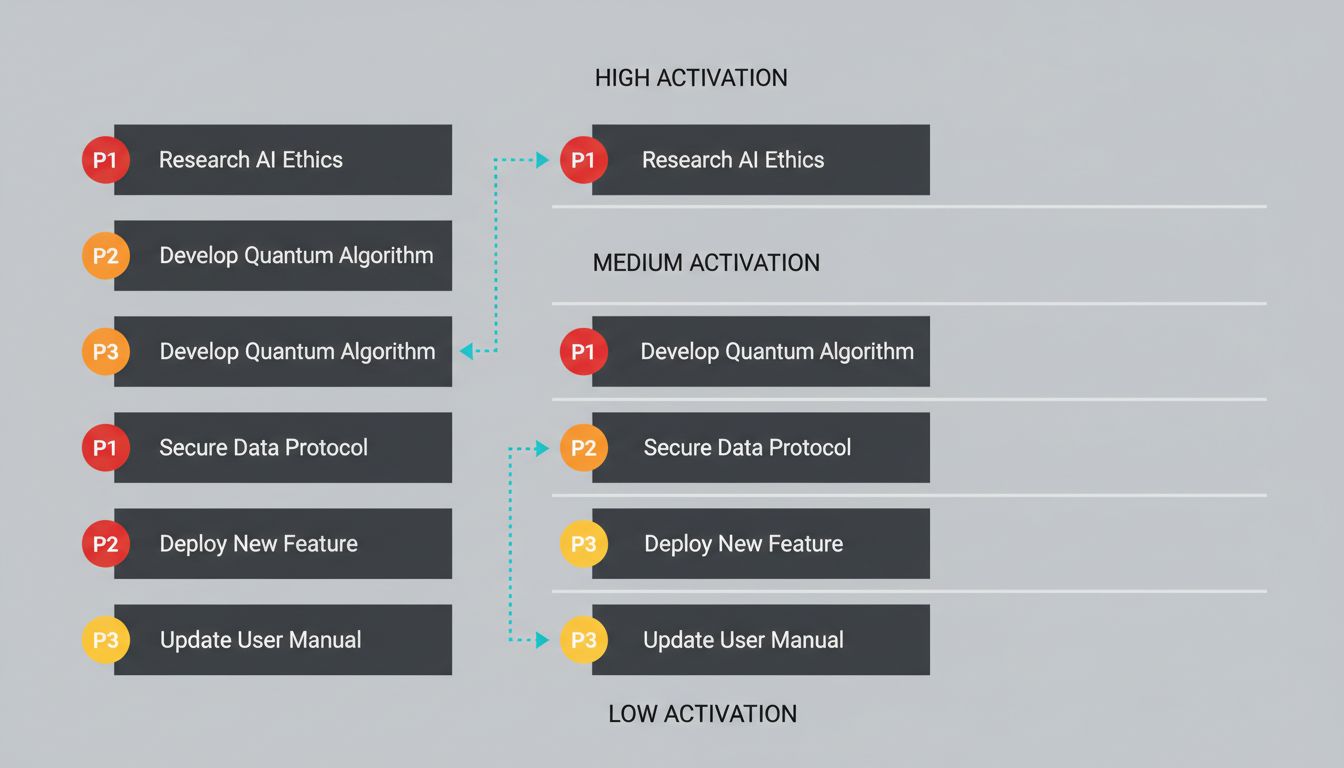
The fix isn’t to abandon priority. It’s to sort by activation energy first, then use priority as a tiebreaker within similar activation-energy bands.
In practice, this means tagging tasks with their context and cognitive requirements rather than just their importance. The Getting Things Done methodology (David Allen’s system from the early 2000s) got partway here with its concept of “contexts,” the idea that you should only see tasks that are executable in your current situation. But GTD still tends to sort within contexts by priority, and it doesn’t explicitly model the cognitive state requirements.
A cleaner implementation: bin your tasks into three bands based on activation energy. Low-activation tasks are things you can do in any environment, in any cognitive state, in under 10 minutes. Medium-activation tasks require a specific context or a modest contiguous block of time but don’t demand peak focus. High-activation tasks require your best cognitive state, controlled environment, and protected time. Within each band, priority determines order.
Now when you open your task list with 15 minutes before a call and moderate mental energy, you’re not staring at a P1 that requires two hours of deep focus. You see the low-activation tasks sorted by priority, and you pick one. The high-activation tasks aren’t gone. They’re waiting for the slot in your day when you’ve explicitly protected time for them, which you schedule proactively rather than hoping you’ll stumble into the right state.
This connects to something counterintuitive about completion rates: finishing fewer tasks per day can mean more gets done precisely because protecting the right conditions for high-activation work beats grinding through a mismatched list.
The Practical Rewrite
You don’t need new software for this. The change is in how you capture tasks, not where.
When you add a task, ask two questions instead of one. Not just “how important is this” but also “what does it cost to start.” You can make this concrete with a simple two-character tag. L for low activation, M for medium, H for high. Combined with your existing priority, a task becomes something like H-P1: Draft proposal for the Andersen account versus L-P2: Reply to Marcus about the offsite dates.
Sort your list view by activation band first. When you have a focused block of protected time, filter to H tasks sorted by priority. When you have a fragmented afternoon, filter to L and M tasks. You stop asking your future self to make the high-stakes meta-decision of “can I handle the hardest thing right now” every time they open the list.
The tasks don’t change. The value judgments don’t change. You’re just sorting on the dimension that actually predicts whether something gets done, instead of the one that sounds most rational in a meeting.