
The Setup
In 2019, Basecamp published something that made a lot of project managers uncomfortable. In their book It Doesn’t Have to Be Crazy at Work, Jason Fried and David Heinemeier Hansson described a pattern they’d watched play out across software teams repeatedly: the most productive-feeling days were often the least productive ones. People cleared inboxes, closed tickets, answered Slack messages, merged small PRs. They hit 6pm exhausted and satisfied. And almost nothing that mattered had moved.
This isn’t a Basecamp-specific observation. But Basecamp is a useful case study precisely because they built a company around diagnosing it, and then built software to fix it. What they spotted, and what the research on knowledge work keeps circling back to, is something you can call the completion bias: humans are wired to finish things, and completable things are not the same as important things.
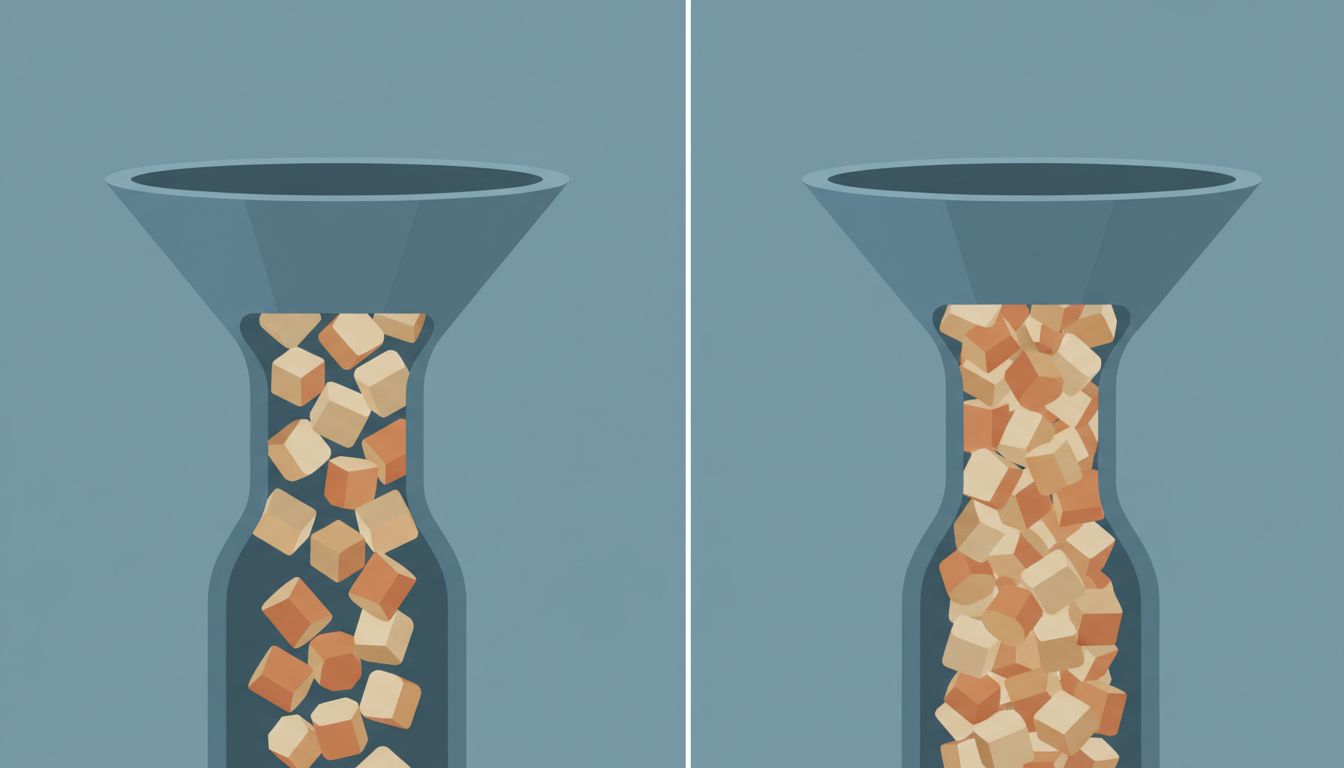
The smaller the task, the easier it is to finish. The easier it is to finish, the more satisfying it feels. So your day quietly fills with small, finishable tasks while the large, ambiguous, genuinely important work sits untouched.
What Happened
Basecamp’s own product team had a habit in the early 2010s that many tech teams would recognize. They kept a running list of bugs, feature requests, and customer feedback, and they triaged it constantly. When something small came in, it felt wrong to let it sit. Fix the broken tooltip. Clarify the confusing label. Adjust the color on that button someone complained about. These were good changes. They took twenty minutes each. They felt like progress.
The problem was that “felt like progress” and “was progress” had quietly drifted apart.
Fried described the realization: the team was shipping a lot, but the product wasn’t getting meaningfully better. They were optimizing at the pixel level while strategic questions about core workflows went unaddressed for months. When they audited where engineering time was actually going, a significant portion was absorbed by tasks that had never been formally prioritized. They’d just been… completable. So they got done.
This is how Basecamp arrived at their six-week cycle model. The structure wasn’t arbitrary. It was specifically designed to make large, ambiguous projects completable on a bounded timeline, giving them the same psychological pull as small tasks. If the issue is that small tasks win because they’re finishable, you make important work finishable too.

The approach forced something else useful: if a project couldn’t be scoped to six weeks, it meant you didn’t understand it well enough yet. Vagueness was no longer a reason to defer something indefinitely. It was a problem to solve before the cycle started.
Why It Matters
The completion bias isn’t just a personal productivity quirk. It has structural effects on teams and products.
When you reward velocity, you get velocity on the wrong things. Teams that measure output by tickets closed or pull requests merged create environments where small, discrete work is systematically over-produced. The engineer who closes forty tickets in a sprint looks productive. The engineer who spent the same two weeks thinking through an architecture decision that will save eighteen months of future rework looks slow. Both are working. One of them is doing something that registers on the scoreboard.
This also connects to something uncomfortable about task lists. Most task management systems are fundamentally better at capturing small work than large work. You can write “update the error message on the signup form” in six words. Try writing a task for “figure out why our activation rate is flat despite strong acquisition numbers.” That’s not a task. That’s a project. And because it resists easy capture, it resists easy scheduling, and it tends to get deferred in favor of things that do fit neatly into a checkbox. As the article Your Most Important Work Never Makes the Task List points out, the work that’s hardest to define is often the work that matters most.
The completion bias also creates a false sense of team health. A team clearing its backlog looks good in retrospect. Status updates are positive. Velocity metrics are strong. But if the backlog was full of small optimizations and the strategic roadmap hasn’t moved in two quarters, the velocity numbers are measuring the wrong thing entirely.
What We Can Learn
Basecamp’s six-week model isn’t the right solution for every team. But the underlying logic is worth internalizing regardless of what tools you use.
Name the bias before it runs your calendar. The first practical step is recognizing that your instinct to knock out quick tasks first is not neutral time management. It’s a cognitive preference for completability, and it will quietly eat your most important work if you let it. When you sit down and feel the pull toward the small stuff, that’s a signal to pause and ask what you’re actually avoiding.
Give important work a bounded shape. Vague projects feel impossible to start and easy to defer. If you can’t articulate what “done” looks like for a piece of work, that’s the first thing to fix, not the last. Basecamp’s insight was that scoping is a prerequisite to scheduling, not an afterthought. Before a big project gets onto your calendar, define what the six-week (or two-week, or one-week) version of it looks like.
Track what you’re not finishing, not just what you are. Velocity metrics tell you how fast you’re moving. They don’t tell you what you’re leaving behind. It’s worth doing a periodic audit: look at the last month of completed work and ask what was on your list at the start of that month that still hasn’t moved. Often you’ll find the same three or four items sitting there, untouched, while dozens of smaller things flowed through. Those immovable items are almost certainly your most important work.
Separate the inbox from the priority list. One structural fix that helps a lot is refusing to let incoming requests live in the same place as your intentional priorities. Incoming work is not prioritized work. It’s just arrived. Treating the inbox as a task list means you’re constantly being pulled toward recency and volume rather than importance. What Actually Happens to Your Attention When You Switch Tasks covers why that context pressure has real cognitive costs beyond just the time spent.
Make small tasks harder to start, not easier. This sounds counterintuitive, but it works. If you can knock out a small task in under two minutes, fine. If it takes longer than that, batch it. Set a specific time for inbox processing, bug triage, and small ticket review. This is the same logic as batching meetings: not because meetings or small tasks are bad, but because allowing them to be interruptible with your primary work ensures your primary work will always lose.
The honest takeaway from what Basecamp figured out is that productivity systems fail not because people are lazy but because the systems optimize for what’s easy to measure. Tasks per day is easy to measure. Progress on hard, ambiguous, strategically important work is not. If your system can’t distinguish between the two, it will reliably prioritize the former.
You probably already know which items on your list matter most. You also probably know which ones you keep finding reasons to start with instead. Close the gap there and you’ll do more real work in a month than most optimized sprint systems will get you in a quarter.