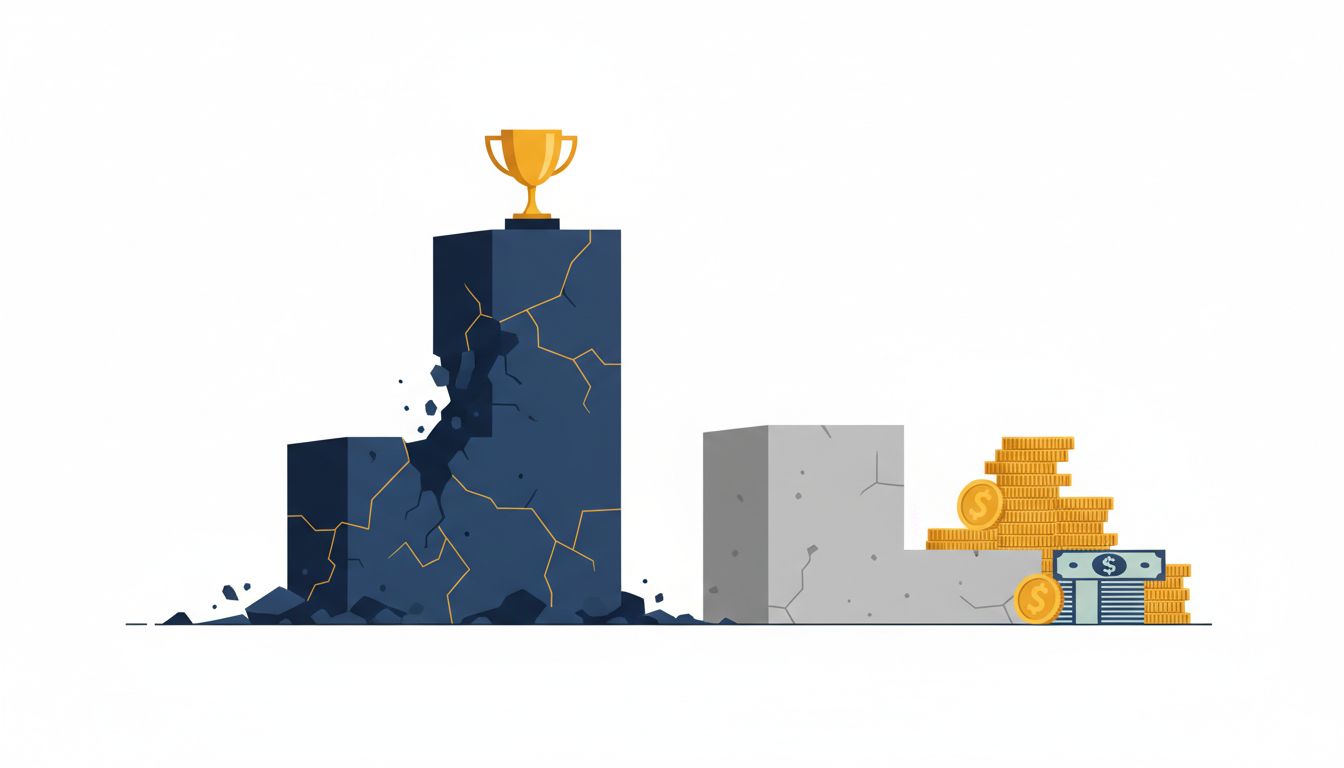

In 2012, Internet Explorer still held a majority of global browser usage. By 2015, Chrome had taken it. By 2019, IE was a rounding error. Microsoft had lost the most visible battle in consumer software, and the tech press treated it as a corporate obituary.
It was not.
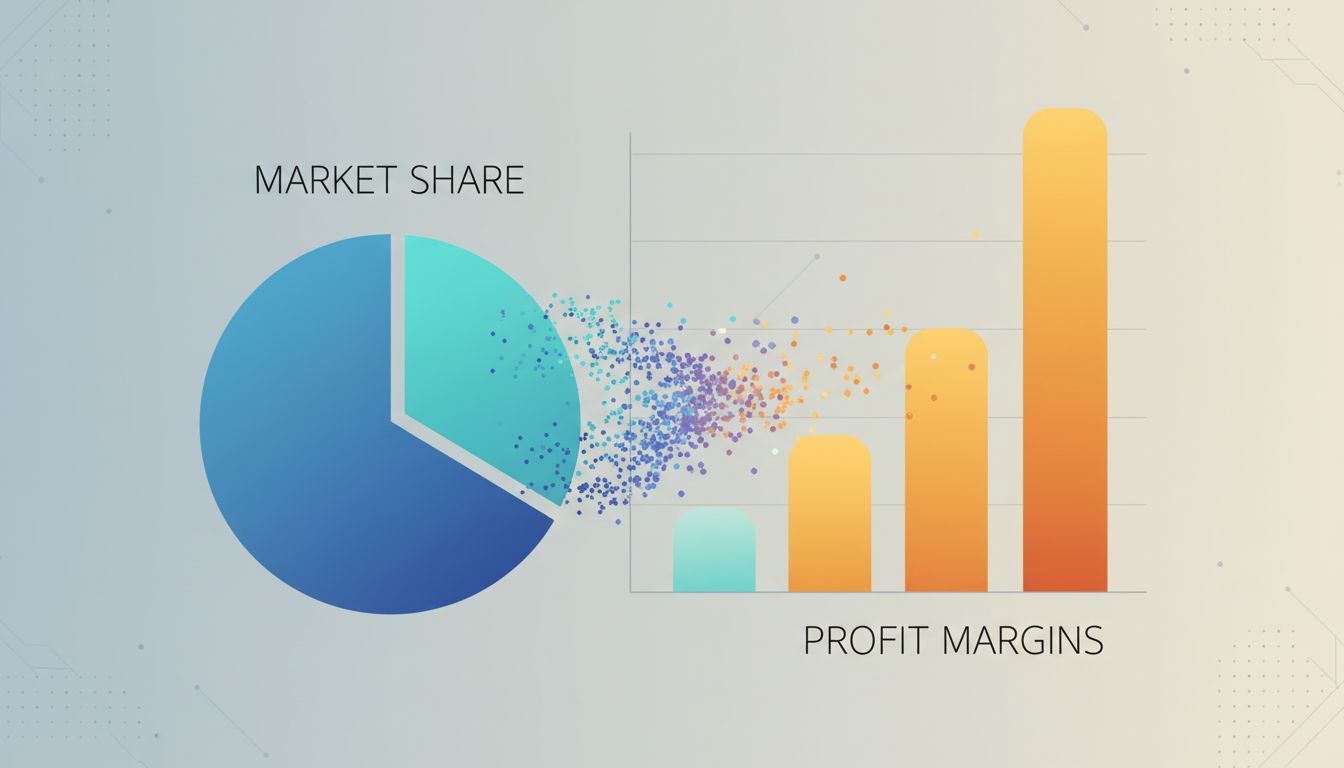
What followed is one of the cleaner illustrations of a pattern that repeats across tech markets with surprising regularity: the company that loses the winner-take-all fight for a category sometimes ends up extracting more durable profit from that category than the winner does. Not always. Not automatically. But often enough that treating market share rankings as a proxy for financial health is a mistake serious analysts keep making.
The Setup
Browser market share is a strange thing to fight over. Browsers are free. Nobody charges for them. The reason Google built Chrome was not to sell it but to ensure that the open web, which Google’s ad business depends on, remained the primary computing surface. Chrome is infrastructure for Google’s real product. Winning the browser war was a means to an end.
Microsoft’s mistake, if you want to call it that, was building IE as a defensive moat rather than as a product. They won the first browser war against Netscape in the late 1990s through bundling and leverage, then essentially stopped innovating. IE became slow, insecure, and miserable to develop for. When Chrome arrived in 2008 with a genuinely faster JavaScript engine and a clean interface, users switched at a pace that surprised everyone.
By conventional logic, Microsoft should have doubled down. Built a better browser. Competed. Instead, after years of failed IE improvement cycles, they killed IE and built Edge on top of Chromium, Google’s own open-source browser engine. They conceded the engine war entirely.
This looked like surrender. It was strategy.
What Happened
While Google was busy defending and extending its browser dominance, Microsoft was repositioning around the one thing browsers cannot commoditize: enterprise software that runs inside them.
Azure, Microsoft’s cloud platform, grew from a distant third behind AWS to a credible second. Office 365 (later Microsoft 365) became the default productivity suite for corporate IT, generating subscription revenue at margins that no ad-supported product can touch. Teams became the enterprise communication layer for organizations that had spent decades already paying Microsoft for Windows licenses. The existing relationships were leverage.
The numbers tell the story plainly. Microsoft’s commercial cloud revenue crossed $100 billion in annual run rate in 2023. Google Cloud, despite massive investment, remained consistently behind Azure in revenue and, for most of that period, operated at a loss while Azure generated substantial operating profit. Google won the consumer browser. Microsoft won the enterprise cloud. Guess which one generates more consistent operating income.
This is not a coincidence. It reflects something structural about how tech markets work.
Why It Matters
Winning a category often means accepting the category’s economics. Google won search, and search is a business where the winner takes the most traffic but also bears the highest cost of defending it: the endless game against SEO manipulation, the regulatory scrutiny, the advertiser relationships that require constant tending. Winning creates obligations.
The second-place company, or the company that concedes one fight to win an adjacent one, often gets to choose better economics. Microsoft didn’t try to out-Chrome Chrome. It asked what enterprise customers actually needed from a computing environment, and answered that question with products that carried real pricing power.
This dynamic shows up across the industry. In smartphones, Apple has never had Samsung’s unit volume. For years Apple’s share of global smartphone shipments was well below Samsung’s. Yet Apple has historically captured the large majority of global smartphone industry profits. Volume share and profit share diverged dramatically because Apple chose to compete on margin rather than scale.
AMD provides another version of the same story. After years of losing the CPU performance crown to Intel, AMD’s Ryzen and EPYC lines found a specific customer segment, data center workloads, where competitive pricing and strong performance per watt mattered more than brand legacy. AMD’s path from perennial underdog to serious profit generator is a case study in what strategic focus from a position of weakness can actually produce.
The pattern also appears in the story of how second movers in markets can exploit the pioneer’s learning costs, as explored in the second company into a market usually wins. But what Microsoft’s story adds is a harder insight: sometimes you don’t need to be second in the same market. You need to let someone else own the expensive turf while you find the ground where pricing power actually lives.
What We Can Learn
First: market share is a leading indicator, not an outcome. It matters insofar as it enables pricing power, customer lock-in, or cost advantages. When it doesn’t produce those things, it’s expensive to maintain and worth questioning.
Second: the companies most at risk are the ones that win a category defined by someone else’s terms. Google defined the browser category as a free, consumer-facing product. When Microsoft tried to compete on those terms, it lost. When Microsoft redefined its terms around enterprise subscription software, it found ground where Google had no structural advantage.
Third: concession can be a form of discipline. Microsoft shipping Edge on Chromium looks, on the surface, like a white flag. But it freed enormous engineering resources from a maintenance burden, gave users a browser that worked, and let Microsoft focus its identity on the things it could actually charge for. Deleting a feature is harder than building one, and conceding a market category is harder still. The instinct to defend every front is almost always wrong.
None of this means market dominance is worthless. Google’s search monopoly has generated extraordinary profits for two decades. The point is narrower: in technology markets, the relationship between the scoreboard and the bank account is consistently less tidy than the press coverage implies. The company that gets written off as a loser often reappears, a few years later, with better margins than the winner.
Microsoft lost the browser war. Its market capitalization passed Google’s parent company Alphabet in 2023 and has remained competitive since. The war, it turns out, was not the point.