The simple version
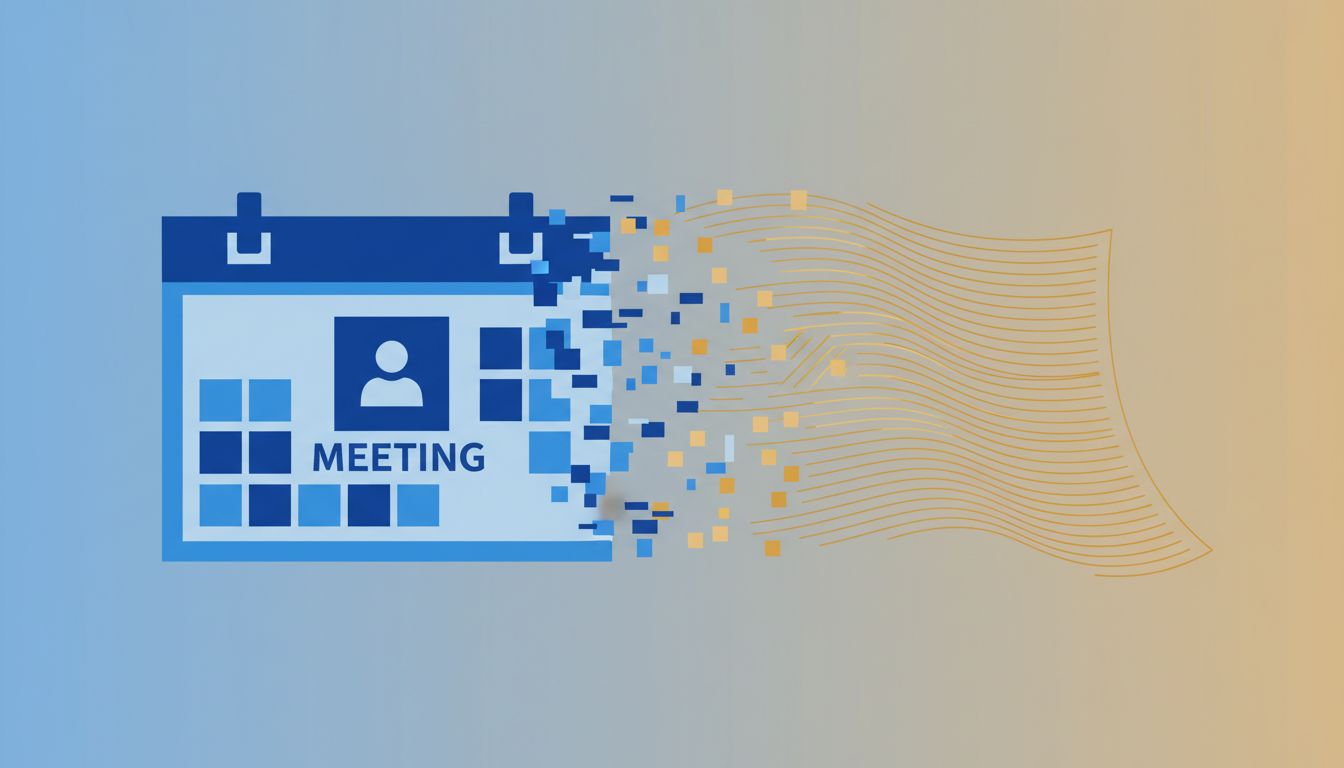
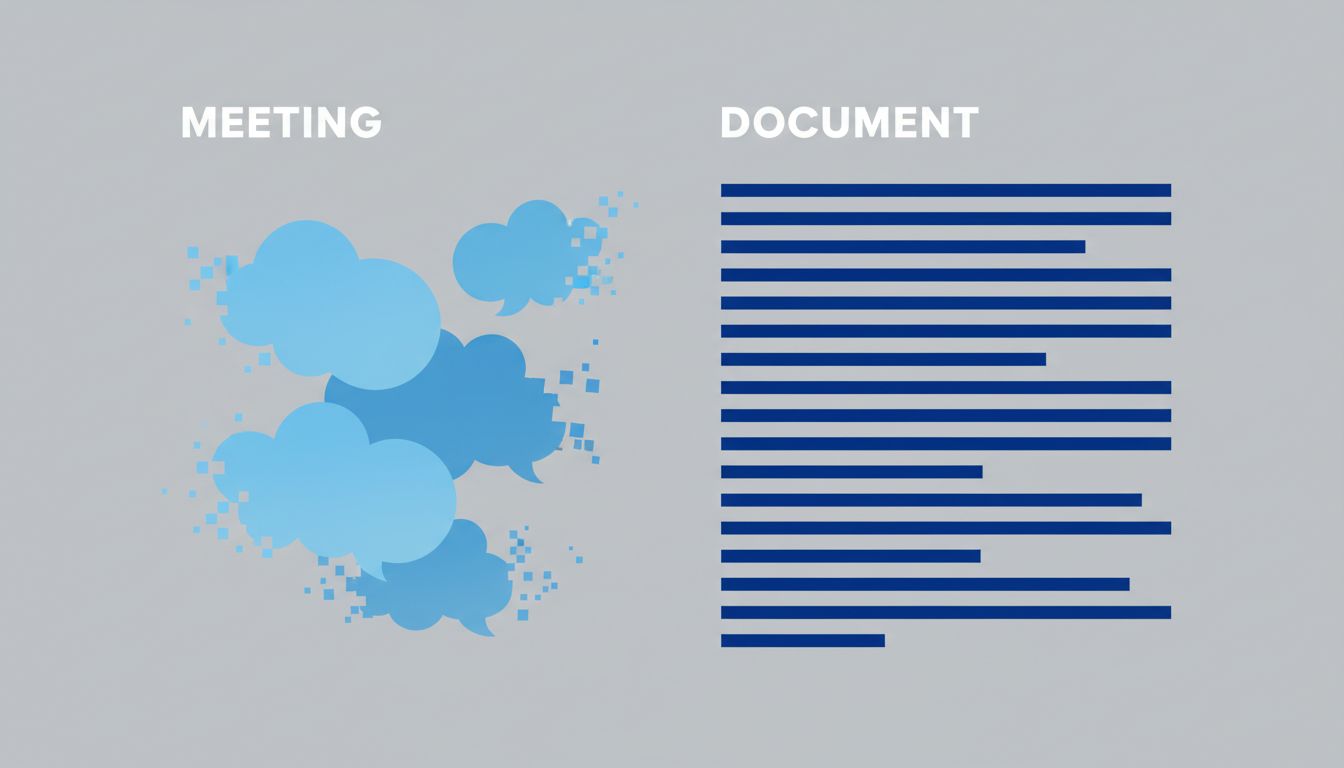
Most meetings exist to transfer information that could live in a written document. Documents are cheaper, searchable, async-friendly, and force clearer thinking.
Why We Default to Meetings
Scheduling a meeting feels productive. It creates a calendar event, signals urgency, and generates the social comfort of a shared commitment. Writing a document, by contrast, requires you to actually know what you want to say before you say it. That’s harder. So we reach for the 30-minute recurring sync the way developers reach for a rewrite when a refactor would do.
The result is a calendar full of meetings that are, functionally, verbal memos. Someone prepared talking points. They’re going to read those points at a group of people who are going to nod and then forget 70% of what was said before they’ve closed the tab. This is not a collaboration failure. It’s a format mismatch.
What Meetings Are Actually Good For
Meetings are high-bandwidth and low-latency. When you’re in a room (or a video call) with someone, you can iterate on an idea in real time, read emotional signals, negotiate disagreement live, and reach a shared emotional commitment to a decision. That last part matters more than people admit. Some decisions don’t stick unless everyone involved feels heard in the moment.
Meetings also work well for:
- Brainstorming with high ambiguity. When nobody knows what the problem space looks like yet, freeform conversation is better than structured prose.
- Conflict resolution. Disputes that have calcified over email need the higher bandwidth of voice and face.
- Relationship building. Trust accumulates faster in real-time interaction. This is a real cost of going fully async that anyone advocating document-everything should acknowledge.
But these are a minority of what actually fills calendars. Most of what fills calendars is status updates, announcements, decisions that one person has already made, and explanations of things that could be read in three minutes.
What Documents Are Actually Good For
A document has properties that a meeting fundamentally lacks.
Persistence. Once written, a document can be read by someone who wasn’t in the room, six months later, without anyone having to reconstruct what was said. The new engineer who joins your team in Q3 can understand why you chose Postgres over MySQL in Q1. They can’t attend your past meetings.
Asynchronous access. The person in Tokyo doesn’t have to be awake at 9am Pacific to receive the information. This sounds like a scheduling convenience, but it’s actually a power distribution issue. Async-first communication gives influence to people who write well, not just to people who perform well in real-time settings.
Forced clarity. Writing something down forces you to complete your thoughts. Vague ideas that survive in conversation don’t survive writing. If you can’t write down what you’ve decided and why, you haven’t actually decided anything yet. This is uncomfortable, which is why people avoid it, but discomfort is doing useful work here.
Scalability. A document answers the same question for 1 person and for 1,000 people at zero marginal cost. A meeting answers a question for 8 people, and if you want to answer it for 8 more people, you schedule another meeting.
Amazon’s internal practice of writing six-page narrative memos instead of slide decks is well-documented. Jeff Bezos described slide decks as concealing rather than revealing thinking. The point isn’t that memos are magic. The point is that requiring people to write complete sentences with subjects and predicates and logical connectives forces them to expose where the reasoning breaks down.
How to Tell the Difference
Before scheduling a meeting, ask what the meeting is supposed to accomplish. There are roughly four categories:
- Information transfer (I need to tell people something). Write a document.
- Decision (we need to choose between A and B). Write a document with the options and tradeoffs, share it ahead of time, then hold a short meeting only if the decision requires live debate. Many decisions don’t.
- Coordination (we need to align on who does what). Write a document with clear owners and deadlines. If there’s genuine ambiguity about ownership, that’s worth a brief synchronous conversation, but the output should still be a written record.
- Creative work or conflict (we need to actually think together or work something out). Meet. This is what meetings are for.
If you’re honest with yourself, most of what you’re scheduling falls into categories 1 through 3.
The corollary is that when you do hold meetings, they get better. When meetings are reserved for genuinely interactive work, people treat them that way. Attention improves. Decisions stick. The compounding distraction cost of fragmented calendars goes down.
Making the Shift Without Annoying Everyone
Switching from meeting-first to document-first is partly a personal discipline and partly a team culture problem. A few things that actually help:
Write the document you would have presented in the meeting. This is the direct substitution. Instead of preparing five slides and booking 30 minutes, write a two-page doc with the context, the decision options, the recommendation, and what you need from readers. Post it and ask for async responses. Most of the time, you’ll get everything you needed without the meeting.
Set an explicit reading window. Async only works if people actually read things. “Please review by Thursday and comment with questions or objections” is more actionable than “here’s a doc, lmk what you think.”
Accept that some people won’t read it. This is a real limitation. Meetings have a captive audience. Documents don’t. You’ll have to decide whether to chase readers or accept that the people who showed up for the document are the people who care. Often, that’s the right group anyway.
Default meeting length to 25 minutes, not 30 or 60. When you do meet, the constraint forces focus. You spend less time recapping things that could have been read.
None of this requires a new tool or a company-wide initiative. It requires deciding that your time (and other people’s time) is worth the effort of writing clearly before you demand attention. That’s a discipline, not a workflow.
The meeting you scheduled to avoid making a decision and the meeting you scheduled to transfer information you could have written down are both borrowing from the same account. At some point, the account is empty, and nothing actually gets done.