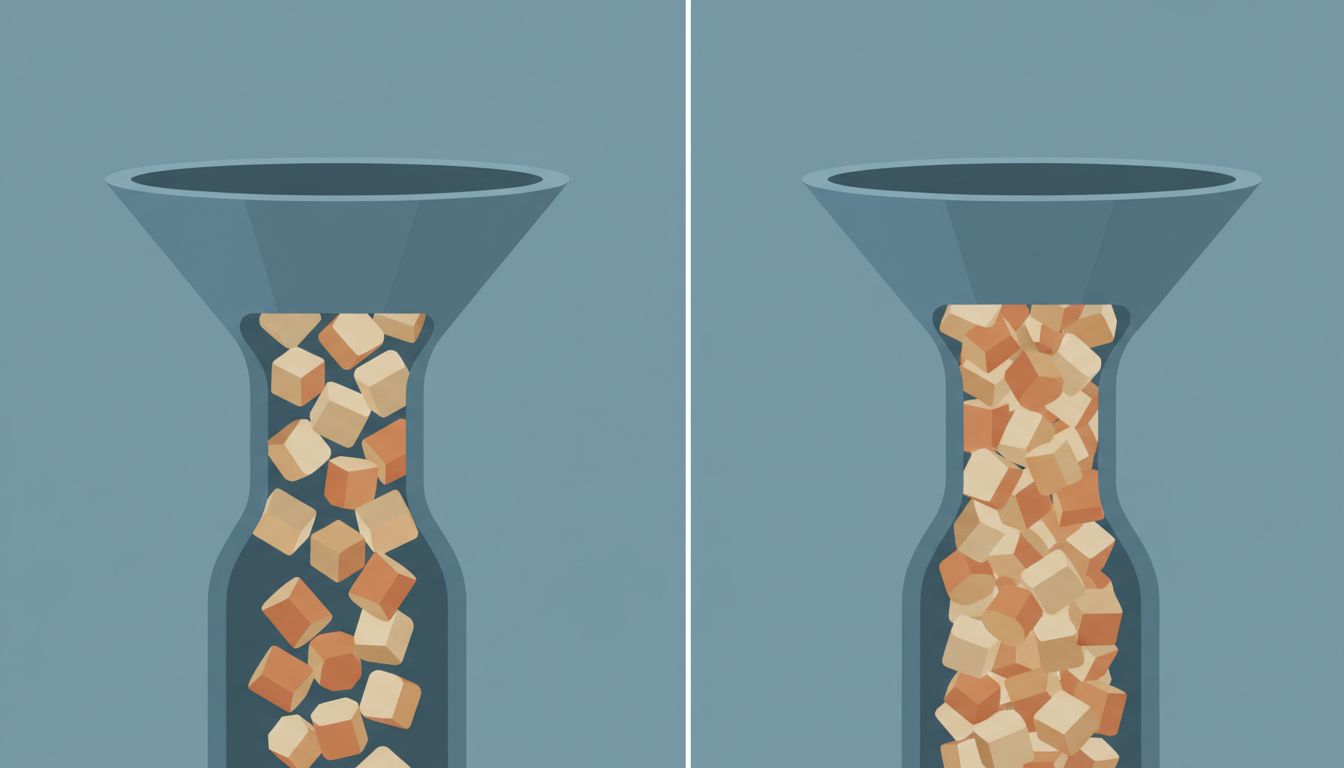

The Guilt Is the Clue
You have a task that has lived on your to-do list for three weeks. Maybe longer. You move it forward every day, sometimes twice. You think about it in the shower. It generates a low, persistent hum of guilt that follows you into other work.
Here’s what most productivity advice will tell you: you’re procrastinating because the task is hard, or uncomfortable, or because you lack discipline. The solution they’ll offer is some variation of “just start” or “break it into smaller pieces.”
That advice is not wrong exactly. But it misses the more important question: why is this particular task so resistant to starting? Because for most of us, the tasks we genuinely want to do, even the difficult ones, don’t stay on a list for three weeks. We get to them. The ones that linger are telling you something.
The guilt is the clue. What it’s usually pointing at isn’t laziness. It’s a misalignment between the task and something more fundamental: your actual goals, your actual role, or what will actually move the needle.
Two Kinds of Avoidance
It helps to separate two distinct things that feel similar from the inside.
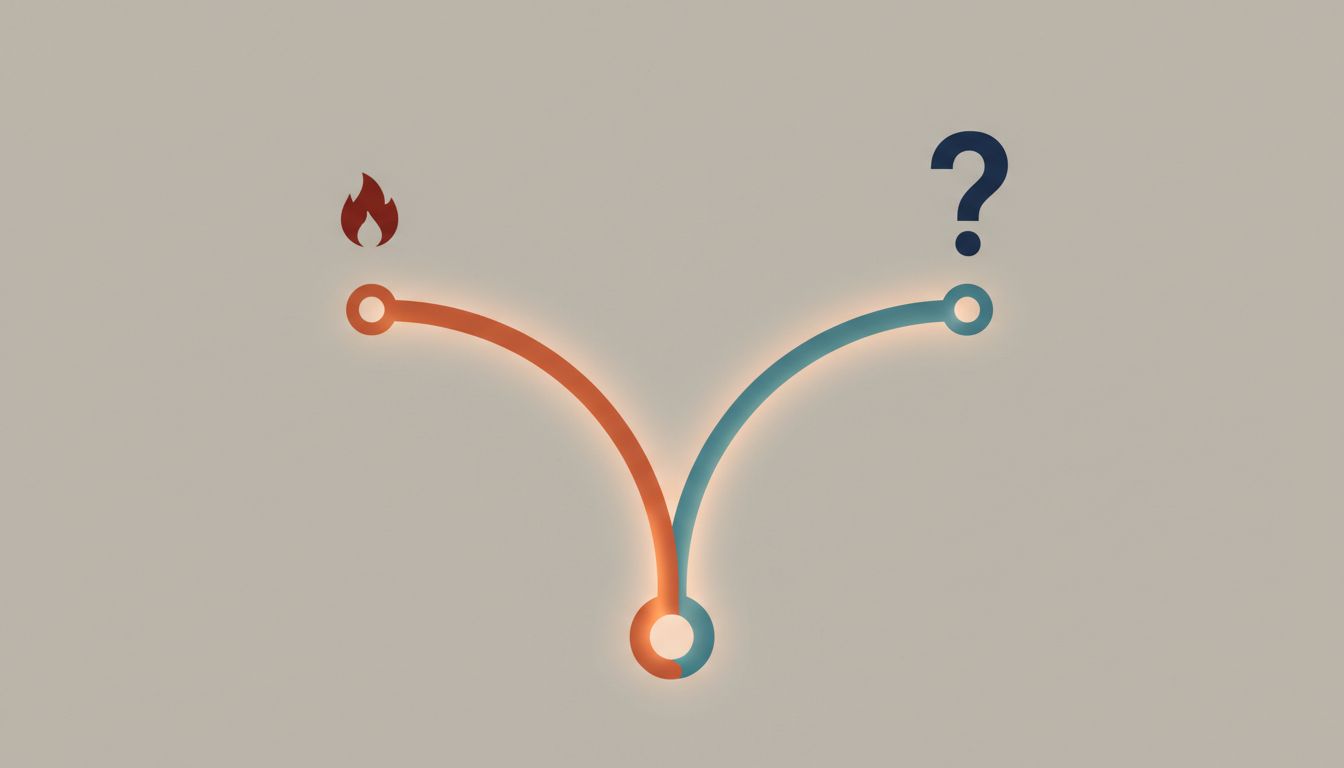
The first is avoidance of difficulty. You’re avoiding something because it requires concentrated effort, because you might do it badly, or because it involves a hard conversation. This is the procrastination that “just start” actually fixes. Breaking a daunting task into a five-minute first step genuinely works here, because the obstacle is activation energy, not direction.
The second is avoidance of wrongness. You’re avoiding something because, at some level, you sense it shouldn’t be done at all, or shouldn’t be done by you, or shouldn’t be done yet. This is the procrastination that “just start” makes worse, because now you’ve invested effort in a task that was already the wrong one.
Learning to tell these apart is the actual skill. The rough test: if someone offered to do the task for you right now, completely and well, would you feel relieved or vaguely uneasy? Relief means you genuinely want the outcome. Unease means part of you already knows the task isn’t right.
Why the Wrong Task Ends Up on Your List
The wrong task usually arrives via one of three routes.
You said yes to something you should have declined. This is the most common one. Someone asked, the request seemed reasonable in the moment, you agreed, and now you’re staring at a deliverable that isn’t actually yours to produce. It’s not wrong for the work to exist; it’s wrong for you to be the one doing it.
You carried it over from an older version of your priorities. A task that made complete sense six months ago can become irrelevant without anyone formally canceling it. Markets shift, product direction changes, your role evolves. But the task stays on the list because removing it feels like giving up, or because nobody explicitly told you to stop.
You invented it to avoid something harder. This one is uncomfortable to admit. The brain is very good at generating plausible-looking work as a buffer against tasks that feel higher-stakes or more uncertain. “I’ll update the documentation before I start the proposal” sounds responsible. Sometimes it is. Often it’s a delay tactic dressed in productivity clothing.
The Real Cost of a Lingering Task
A task that sits undone isn’t neutral. It has ongoing costs that accumulate.
The most obvious is attention fragmentation. Every time you see the task, your brain partially engages with it, runs through the reasons you haven’t done it, and then moves on. That’s not free. Research on what psychologists call the Zeigarnik effect shows that incomplete tasks hold a disproportionate claim on working memory compared to completed ones. You’re carrying this thing everywhere even when you’re not looking at it.
The subtler cost is the way a lingering task depresses confidence about adjacent work. There’s a specific kind of cognitive heaviness that comes from a backlog of stuck items, and it tends to make new work feel harder than it actually is. If your to-do list is optimized for adding tasks rather than completing them, a wrong task will stay there indefinitely, compounding this effect.
The third cost is opportunity cost in the most concrete sense. The time you spend managing, worrying about, and occasionally poking at the wrong task is time not spent on the right one.
How to Audit a Stuck Task
When a task has been stuck for more than a week, put it through this sequence of questions. Go in order and stop when you hit a decisive answer.
Should this task exist at all? Not “was it a reasonable idea” but “is it still worth doing given everything that’s true right now?” If the honest answer is no, delete it. Not archive it, not move it to a someday list. Delete it, and if someone asks, tell them you decided it wasn’t worth the time.
Should I be doing it? Some tasks exist and matter but belong to someone else. The fact that you’re the one who noticed a problem doesn’t obligate you to solve it. If this is a delegation question, make the ask or the handoff explicit, and remove it from your personal list.
What am I actually waiting for? Sometimes a task is stuck because there’s a real dependency and the right move is to park it consciously rather than pretend it’s active. Label it as blocked, note what it’s waiting on, and stop touching it until that condition changes.
Is something I’m calling a single task actually multiple decisions? A lot of chronic avoidance traces back to a task that contains an unacknowledged decision inside it. “Write the Q3 strategy document” might actually be “first decide whether we’re pursuing strategy A or strategy B, then write the document.” The decision is the real obstacle, and until you name it as such, no amount of breaking the writing into subtasks will help.
What to Do Once You’ve Named the Right Task
Once you’ve cleared the wrong tasks, the right ones tend to feel different even before you start. They don’t require the same activation energy. You may still procrastinate on them (most genuinely important work involves some discomfort), but the character of the resistance changes. It feels like avoiding something hard, not avoiding something wrong.
For these tasks, the standard procrastination tools are legitimately useful. Starting with a concrete, small action does help. Setting a specific time to work on something rather than keeping it on a floating list makes a real difference. As noted in research on implementation intentions, specifying when and where you’ll do a thing meaningfully increases follow-through compared to simply intending to do it.
The other thing worth doing is protecting the time you’ve carved out. If you’ve decided that a task matters, the default should be keeping that block intact, not sacrificing it to things that feel urgent but aren’t. Your most productive hour is probably the one you keep booking over, and right tasks done in protected time compound in ways that urgent tasks done reactively don’t.
What This Means in Practice
The shift this article is asking you to make is small but not trivial. It’s moving from “how do I get myself to do this” to “should I be doing this at all” as the first question when a task stalls.
That question feels like it could become an excuse for avoidance. And it can, if you apply it dishonestly. But in practice, most people ask it too rarely, not too often. The default is to keep pushing a task forward because removing it feels like failure, or because someone might notice, or because you’ve already thought about it so much that deleting it feels wasteful.
None of those are good reasons to keep working on the wrong thing.
The most productive thing you can do with a three-week-old task that hasn’t moved is sit with the possibility that it should be canceled, delegated, or fundamentally reframed, before you spend a fourth week trying to start it. The answer might still be “this is right and I need to do it.” But asking the question first costs you ten minutes. Not asking it can cost you months.