
You have a document somewhere, probably open in a tab right now, that you’ve been meaning to finish. A strategy memo, a technical spec, a decision log, a personal framework for how you want to work. It’s been “almost done” for weeks. Maybe months. You feel vaguely guilty about it every time you see it.
Stop feeling guilty. There’s a reasonable chance that document is doing more useful work than the polished one you sent out last quarter.
Writing Is Thinking, and Thinking Has Value Before It’s Packaged
The dominant model of document productivity treats writing as a delivery mechanism. You write something, you publish it or send it, and that’s when the value gets created. Everything before that moment is just prep work. By this logic, an unfinished document is a failed one.
But that model is wrong, and most knowledge workers know it from experience even if they’ve never articulated it. The act of writing forces a kind of rigor that thinking alone doesn’t. You can hold a fuzzy idea in your head for weeks, believing you understand it, until you try to write it down and discover you can’t explain what it actually means. The writing surfaces the confusion. The unfinished document is often where that surfacing happens.
This is why engineers are frequently told to write up their design before they build it, even for internal projects that no one else will read. It’s not about communication. It’s about finding out whether the design is actually coherent. The document is doing work on the author, not just on future readers.
What Published Documents Actually Get Right (and Wrong)
Published documents have a real advantage: they create shared understanding. A spec that lives in your head helps no one but you. A decision log that never circulates means the same decision gets relitigated six months later. These are genuine costs, and they’re why “we need better documentation” is a perennial complaint in any organization that has outgrown a single room.
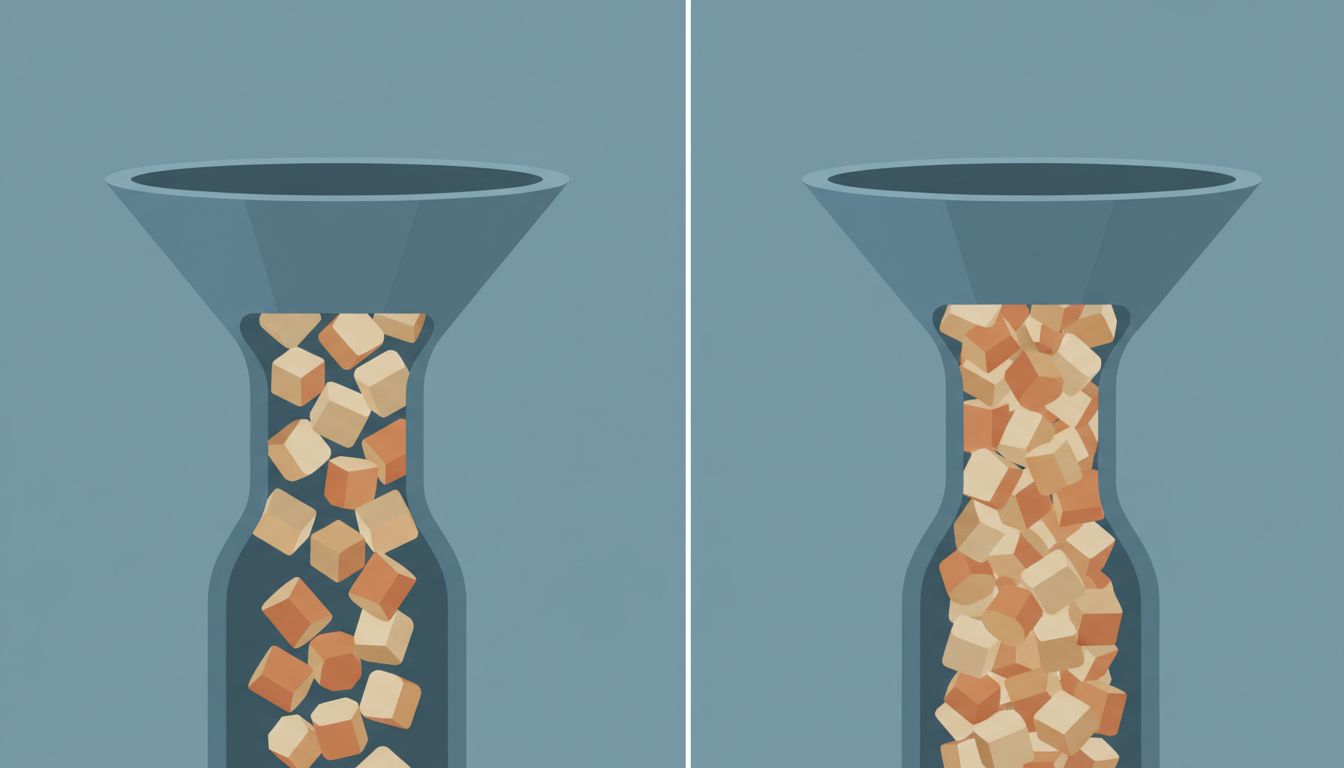
But published documents also carry a real cost that doesn’t get talked about enough. Publishing freezes thinking. Once something is out, it becomes a reference point, and reference points develop gravity. People cite the document. Decisions anchor to it. Updating it requires overcoming everyone’s mental model of what it said, not just the words on the page.
If your thinking is still developing, publishing too early doesn’t speed things up. It locks in whatever was half-baked at the moment you hit send. You’ve traded the flexibility of an unfinished document for the social weight of a finished one.
The unfinished document, meanwhile, stays plastic. You can contradict yourself in it. You can write two incompatible things and let them sit next to each other until you figure out which one you actually believe. You can leave a section blank because you genuinely don’t know yet, without that blank being a visible gap that someone will ask you about in a meeting.
The Specific Work Your Drafts Are Doing
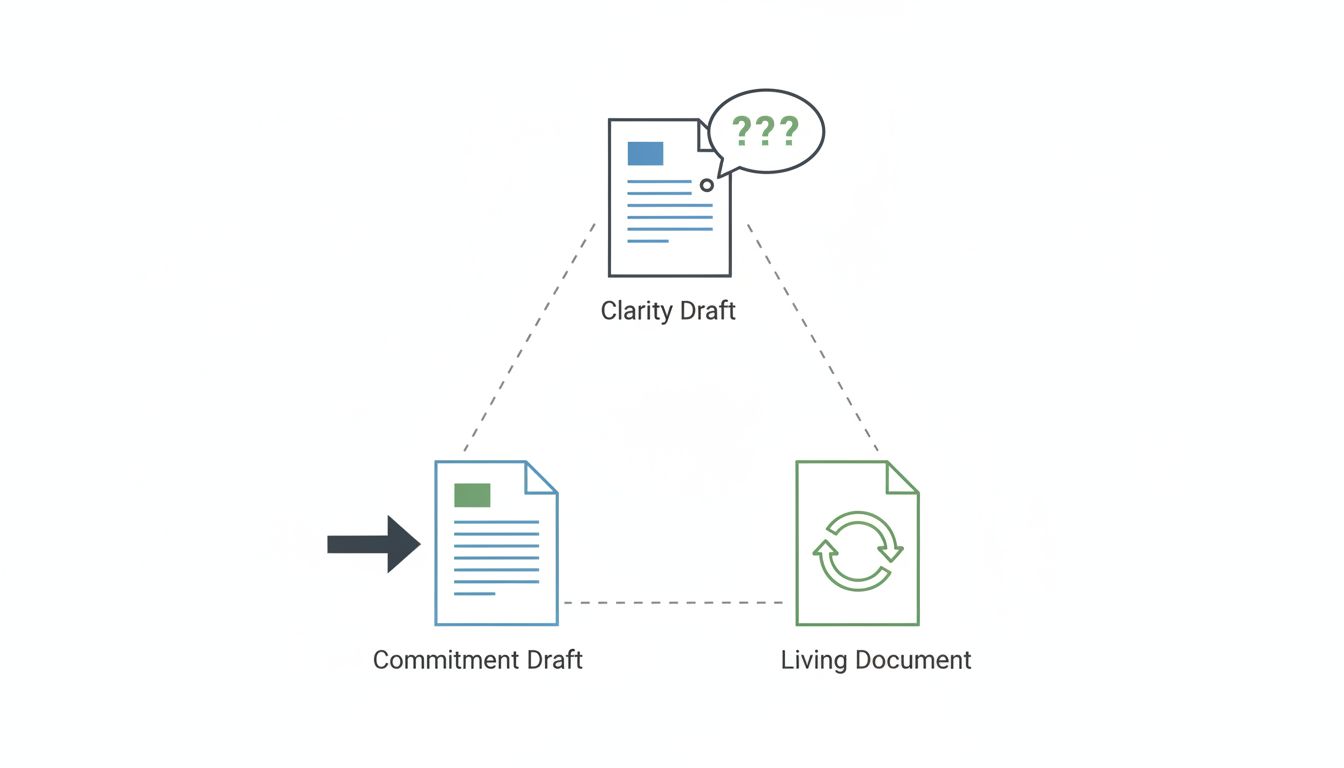
If you look at the unfinished documents cluttering your drive with fresh eyes, you’ll probably find they fall into a few categories, each doing something distinct.
Some are clarity drafts. You started writing because you were confused, and the writing is how you’re resolving that confusion. These documents might never need to ship. The artifact isn’t the point; the thinking is. Many of the best strategy and engineering decisions get made in documents no one ever reads.
Some are commitment drafts. You’re not confused, you’re avoidant. You know what you think but writing it down in final form would mean committing to it publicly, and you’re not ready for that. These documents actually do need to ship, and you know it. The problem isn’t the document, it’s that finishing a task and closing it are not the same thing.
Some are reference drafts that you return to periodically. A personal framework, a set of working principles, a running log of decisions and why you made them. These documents serve you precisely because they’re never “done.” Finishing them would mean stopping the accumulation, which would make them less useful over time.
Knowing which kind you’re looking at changes what you should do with it.
How to Stop Mismanaging Your Drafts
The practical problem is that most productivity systems treat all unfinished documents the same way: as tasks with missing checkmarks. This is why your note-taking app makes you feel vaguely behind on your own thinking. The second brain metaphor breaks down exactly here, because brains don’t have an inbox and a done pile.
A more useful approach is to mark your drafts explicitly by type. A simple label at the top of the document, or in the filename, is enough. “Working doc, not for sharing” tells you and anyone who might stumble across it that this is a clarity draft. “Draft, needs publishing” tells you you’re in avoidance territory. “Living document” signals that this one stays open by design.
You can also set a simple review cadence for living documents. Once a month, look at your clarity drafts and ask whether the thinking is resolved. If it is, the document can be archived. If a commitment draft has been sitting for more than a few weeks, that’s a flag worth paying attention to.
The goal isn’t to get everything published. The goal is to know what each document is for, so you stop treating a useful thinking tool as an overdue chore.
The Document You Should Publish Less Of
There’s a version of this argument that goes too far: that everything should stay in draft forever, that sharing creates overhead, that the best documentation is the kind you keep to yourself. That’s not the point.
The point is that published documents are expensive in ways that unfinished ones aren’t, and the productivity default of treating “shipped” as the only meaningful state is costing you something real. Your most valuable intellectual work often happens before you’ve decided what to do with what you’ve learned.
Finish the documents that need finishing. Leave open the ones that are working as thinking tools. And stop measuring your productivity by the ratio of published drafts to total drafts, as though the numerator is the only number that matters.