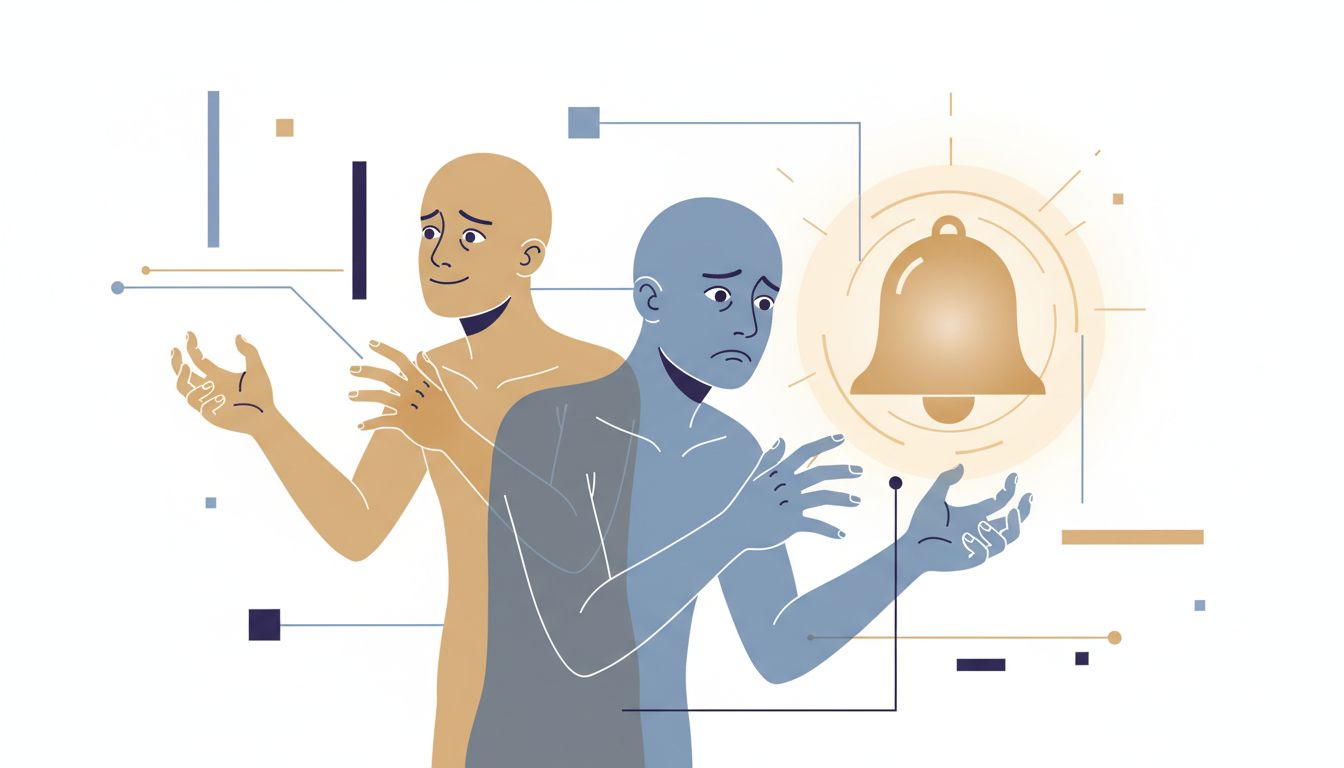
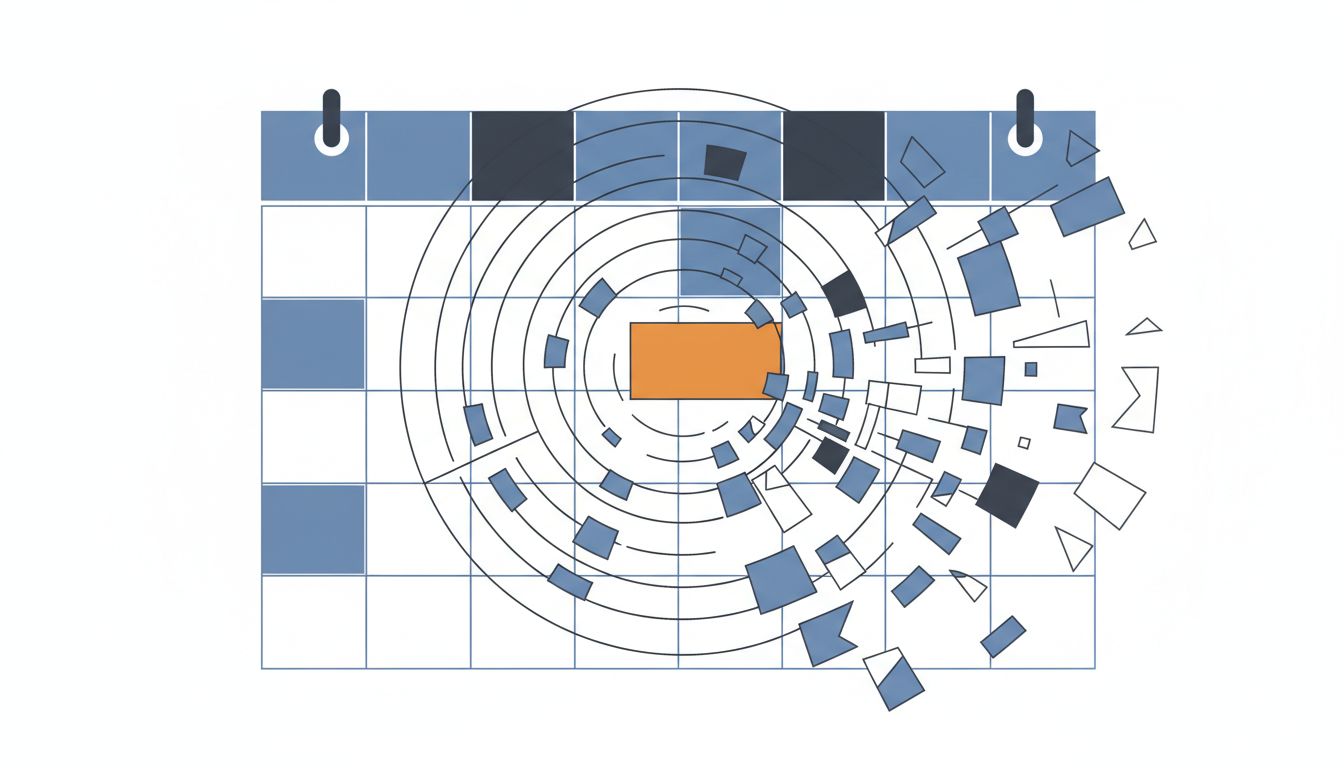
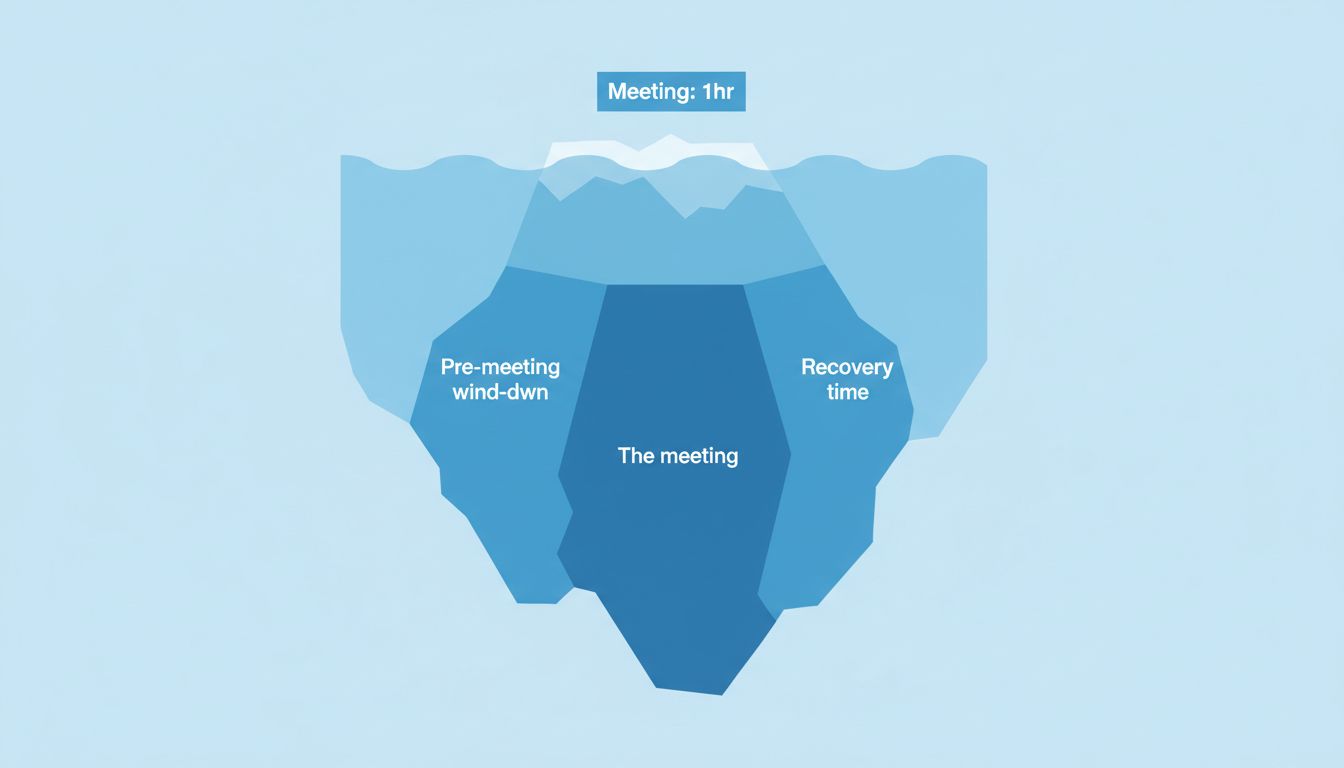
Your calendar is lying to you. That one-hour check-in didn’t cost you one hour. It cost you the 45 minutes you spent anxiously wrapping up work beforehand, the hour in the room, and the 90 minutes it took your brain to climb back to full concentration afterward. Three hours gone. One meeting on the books.
This is the real meeting tax, and most productivity systems refuse to account for it. We talk about reducing meeting count, shortening agendas, keeping standups tight. All useful. But the frame is wrong. The question isn’t “how do we make meetings better?” It’s “why are we scheduling things that are costing us three times what we think they cost?”
The calendar only captures the event, not the damage
Researchers studying interruption and recovery have found that after a significant disruption, it can take 20 minutes or more to return to demanding cognitive work. A meeting isn’t just a discrete block of time. It’s a before, a during, and an after, and only the “during” shows up on your schedule.
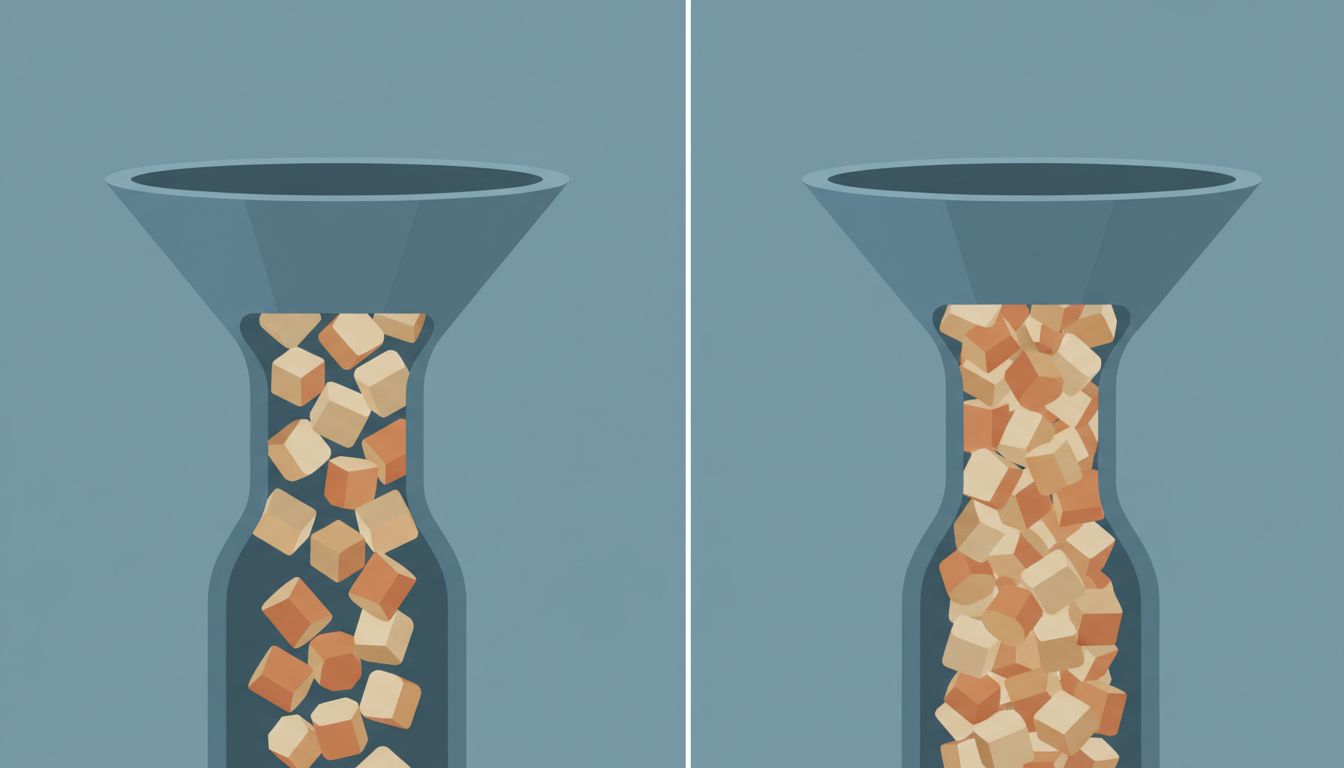
Knowledge workers feel this intuitively. Ask any engineer or writer where their best thinking happens, and they’ll describe large, unbroken stretches of time. Ask them how often they get those stretches, and watch their face. Context-switching feels free until you measure it, and the same is true of meetings: the cost is invisible precisely because it’s distributed across time you can’t see on a calendar.
Most meetings are substitutes for better documentation
If your team needs a meeting to get aligned on a decision, that’s usually a signal that the decision wasn’t written down clearly enough for people to evaluate it on their own. The meeting isn’t solving a coordination problem. It’s patching a communication failure.
This is the argument that distributed teams figured out before everyone else. When you can’t default to “let’s just grab a room,” you’re forced to write things down. You’re forced to think through your reasoning before presenting it. The output is a shareable artifact that creates alignment without requiring ten people to be awake at the same time. What distributed teams figured out about deep work applies directly here: asynchronous communication isn’t a compromise, it’s often the better tool.
The social pressure to meet is real, and it’s making you worse at your job
Meeting culture persists partly because meetings feel productive. You showed up. You talked. There was energy in the room. This is a feeling, not a result. And it’s a feeling that managers and team leads are especially susceptible to, because meetings look like management.
There’s also a subtler pressure: scheduling a meeting signals that you take something seriously. Sending a document feels casual by comparison, even when the document represents more thinking and creates more useful output. This is a cultural bug, not a feature, and it’s worth naming directly. The meeting that didn’t need to exist got scheduled because someone wanted to demonstrate they were on top of it. Everyone paid for that signal.
The counterargument
Some things genuinely require a meeting. Difficult conversations, complex negotiations, and moments where tone and relationship matter more than information transfer. Nobody is arguing you should fire someone over a shared Google Doc.
There’s also a real case for the informal meeting as a trust-building mechanism, especially for distributed teams where colleagues rarely share physical space. Spending 30 minutes talking without a formal agenda can strengthen working relationships in ways that asynchronous tools don’t replicate easily.
But notice what those cases have in common: they’re human moments, not information-transfer moments. The useful meeting is one where the interaction itself is the point. The useless meeting is one where the output could have been achieved without everyone being in the same room at the same time. Most meetings fall into the second category. That’s the honest observation here.
Treat your calendar like a budget, not a diary
The practical change is simple but uncomfortable: before you schedule anything, ask what would have to be true for this to justify a three-hour cost per attendee. Not one hour. Three.
If you can’t answer that clearly, write it down instead. Send the document, ask for written responses, and make a decision based on what comes back. You’ll often find that the decision gets made faster, with better reasoning, and without anyone having to stare at a conference room ceiling.
Most meetings fail before anyone shows up because nobody asked whether they should exist at all. That question is the one worth adding to your workflow. Ask it every time. Your best work lives in the time you protect from the answer.