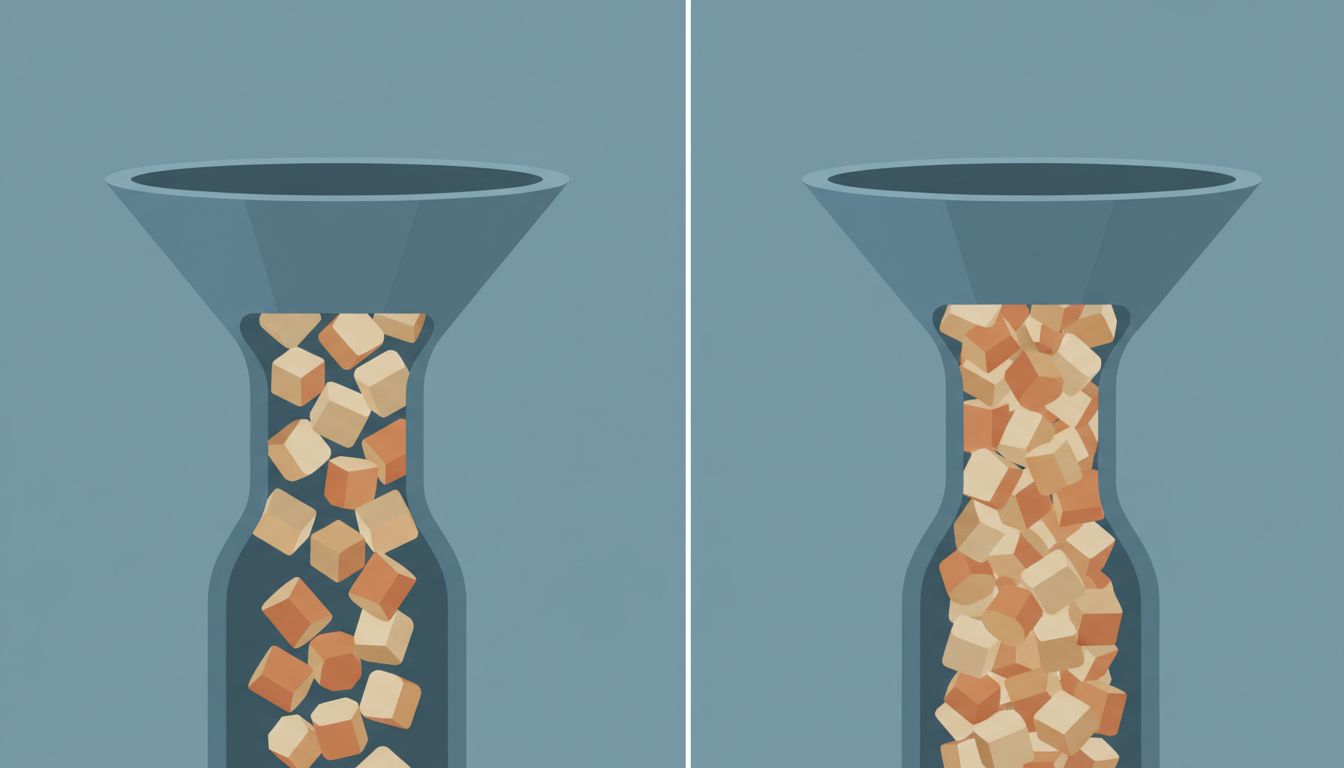
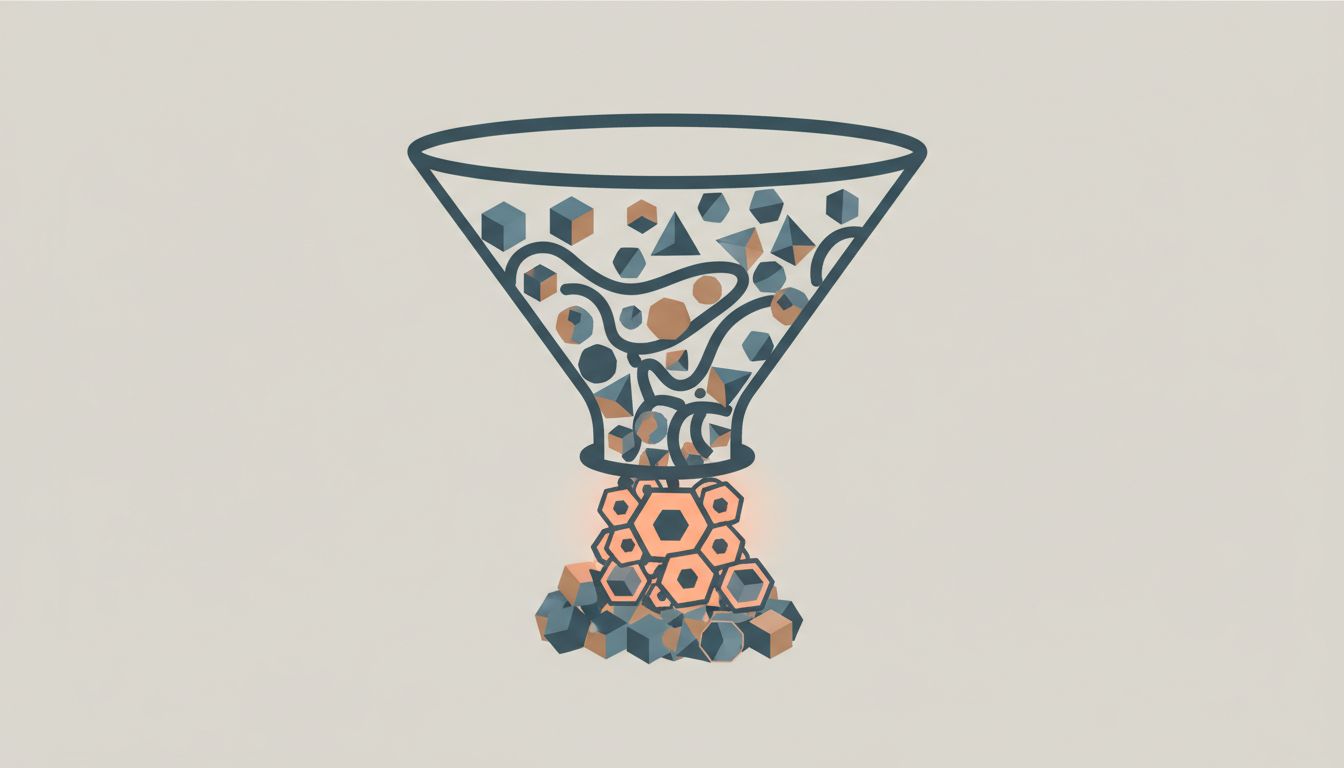
You probably have a to-do list. You probably also have tasks on it that have been there for months. That’s not a discipline problem. It’s a design problem.
Most task management systems, from paper notebooks to Notion to sophisticated GTD setups, are optimized for capture. Adding a task takes two seconds. Deciding what to actually do with it, and when, and whether it still matters? That part is entirely up to you. The result is a list that grows faster than it shrinks, which starts to function less like a productivity tool and more like a catalog of your own guilt.
Here’s what’s actually going wrong, and what you can do about it.
1. Capture Is Frictionless. Completion Is Not.
Every productivity system rightly emphasizes frictionless capture. Don’t lose the idea, write it down immediately, get it out of your head. The problem is that this ease of entry has no counterpart on the exit side. There’s no moment when your system asks: does this still need to happen? Is this the right time? Does this belong to you?
The fix is to build a lightweight weekly review into your workflow. Not a two-hour audit, just ten minutes. Go through your list and ask three questions about each item: Is this still relevant? Can I delete it? If neither, does it have a specific day and time assigned? Anything that survives all three questions and still lacks a scheduled slot isn’t a task yet. It’s a wish.
2. Tasks Without Contexts Are Almost Impossible to Execute
A task like “sort out the server billing” sits inert on your list because it’s missing the conditions under which you can actually do it. You need access to the admin panel, thirty minutes, and probably a quiet block where you won’t be interrupted. A task like “call dentist” requires a phone, business hours, and two minutes. These are completely different things, but most lists treat them identically.
David Allen’s GTD system solved this with contexts, labels like @phone, @computer, @waiting, that let you filter your list by what’s actually actionable right now. Even a simplified version of this works well. When you add a task, append what you need to do it. “Sort out server billing (admin access, 30 min, no calls)” is a task you can schedule. The stripped-down version just sits there.
3. Everything on the List Looks the Same Size
One line for “reply to Tom” and one line for “redesign onboarding flow” appear identical in most task managers. This creates a specific failure mode: you spend your high-energy hours clearing easy items because they give you a sense of progress, while the hard, important things accumulate. Research on task completion shows people consistently gravitate toward tasks that are easier to define and shorter to complete, regardless of their actual importance.
This is worth being honest with yourself about. If you’ve read “The Tasks You Finish Fastest Are Rarely the Ones That Matter”, you’ll recognize the pattern. The fix isn’t willpower. It’s structure. Separate your list into two tiers: one or two things that genuinely matter today, and everything else. Work on the first tier before you’re allowed to touch the second. The list becomes a queue, not a buffet.

4. No Task Ever Naturally Dies
This is the quiet killer. Most to-do apps have no concept of expiration. A task you added six months ago about researching a vendor you’re no longer considering just sits there, slightly accusatory, every time you scroll past it. Over time, the list fills up with items that are stale, superseded, or simply no longer worth doing. But deleting them feels wrong somehow, like admitting defeat.
You need a regular culling ritual, and it needs to be guilt-free by design. Some people use a “someday/maybe” list (borrowed from GTD) as a parking lot for things they’re not ready to delete but can’t commit to. Others set a monthly calendar reminder specifically to kill zombie tasks. What works is less important than having a deliberate mechanism. A list you trust is one where everything on it is something you’ve consciously chosen to keep.
5. The List Doesn’t Know What You’re Optimizing For
Your task manager doesn’t know your actual goals. It holds whatever you put in it. That means the list can fill up with tasks that are urgent but not important, requested by others but misaligned with your priorities, or just habitual (“check analytics every morning”) without being genuinely valuable.
Once a week, look at your completed tasks and ask whether those completions moved you closer to the one or two things that actually matter to you right now. If the answer is mostly no, your list has drifted. The tasks are real, but they’re optimizing for someone else’s agenda, or for a version of your priorities you held three months ago. Resetting the list to reflect your current focus, even if that means mass-deleting things that feel important, is one of the highest-value productivity moves you can make.
6. Reviewing and Planning Feel Like Extra Work
The reason most people don’t do weekly reviews is that the review itself isn’t in their task manager, or if it is, it’s the first thing they skip when time gets short. This is circular: the system doesn’t get maintained because maintenance isn’t built into the system.
Schedule the review as a recurring calendar event, not a to-do item. Thirty minutes on Friday afternoon, or Sunday evening, wherever you have a reliable window. Protect it the way you’d protect a client call. The review is what transforms a passive list into an active decision-making tool. Without it, you’re just accumulating. The list grows. Things don’t get done. And you assume the problem is motivation, when really it’s just that nobody ever bothered to build the exit ramp.
Your to-do list isn’t broken because you’re bad at productivity. It’s broken because adding tasks is easy and everything else is optional. Make the maintenance mandatory, give tasks the context they need to be actionable, and cull relentlessly. The goal isn’t a longer list. It’s a shorter one you actually trust.