The simple version
A to-do list tells you what you said you’d do. It has no opinion on whether any of it should be done at all.
Why the list feels productive but isn’t
There’s a specific kind of satisfaction that comes from adding something to a list. It feels like progress. The task exists now. It’s been acknowledged. And when you check it off, your brain gives you a small dopamine hit that has nothing to do with whether completing that task actually mattered.
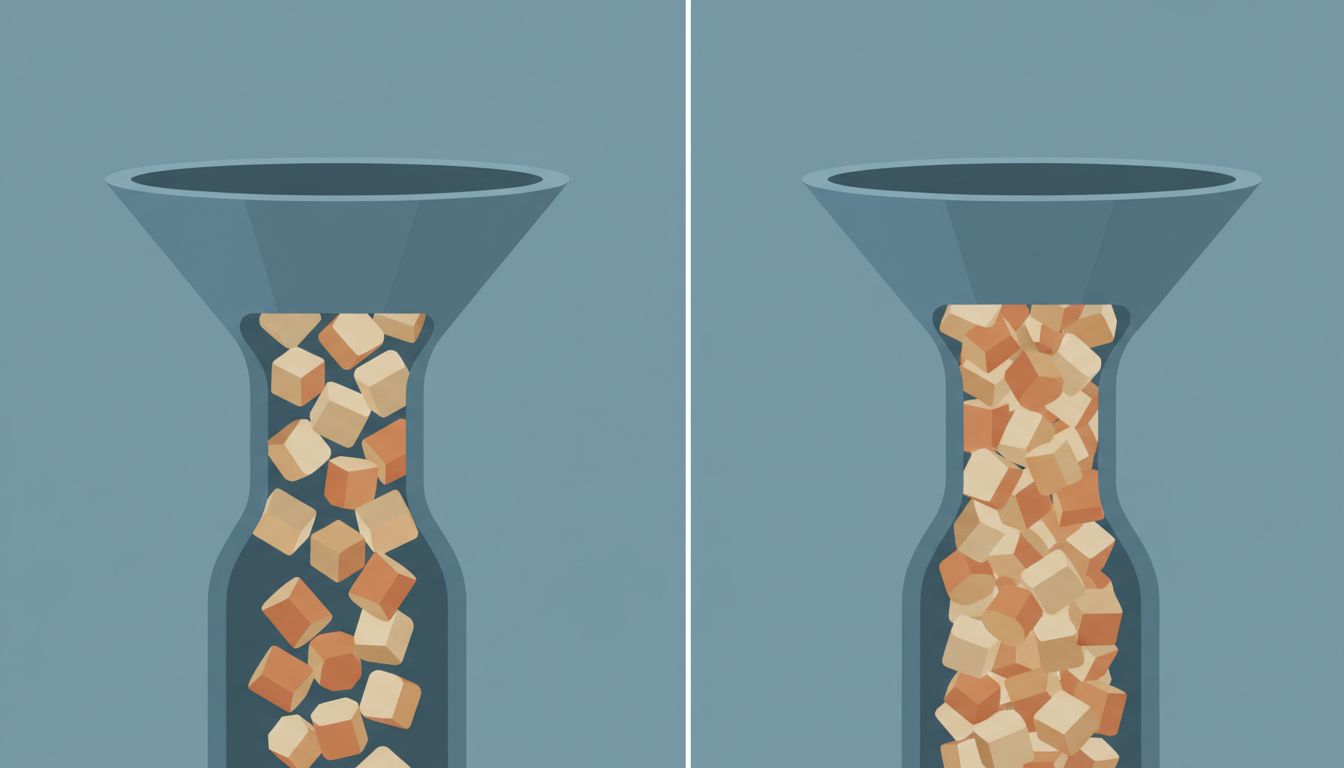
This is the core design flaw. To-do lists are capture systems. They’re excellent at one thing: making sure you don’t forget something you thought of. The problem is that most people use them as prioritization systems too, and they’re genuinely bad at that job.
Think about how most lists grow. You add items as they occur to you, or as requests land in your inbox. The list is therefore ordered by arrival time, not importance. You work through it roughly top-to-bottom, or you cherry-pick the easy ones (a well-documented behavior called “completion bias”), and at the end of the week you’ve been busy the entire time but the hard, important things are still sitting there.
The thing lists can’t represent
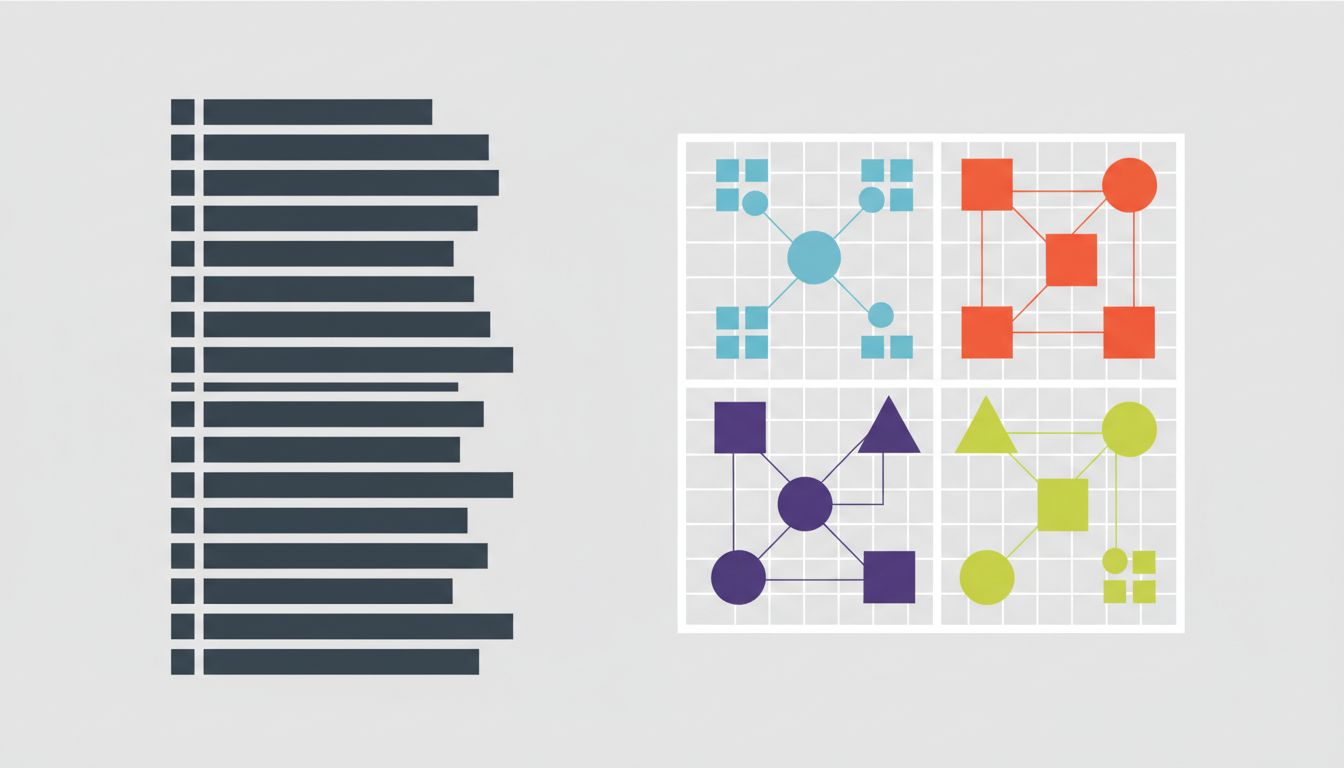
Here’s the structural problem: a flat list has no way to encode the relationship between effort and value. Every item sits at the same level of abstraction. “Reply to Karen’s email” and “decide whether to shut down the mobile product” are both just checkboxes.
Software engineers run into an equivalent problem in project planning. A backlog of tickets looks like a prioritized list of work, but what it usually is is a graveyard of things someone once thought were good ideas, with the newest items at the top and no mechanism for revisiting whether the older ones still make sense. The list grows indefinitely. Nothing ever gets removed on purpose. Sound familiar?
The Eisenhower Matrix (urgent vs. important, on two axes) is the most famous attempt to fix this. It’s a decent mental model, but most people use it as a sorting filter rather than a deletion filter. You sort tasks into quadrants and then do all of them in a different order. The real insight the matrix is trying to teach is that the bottom-left quadrant (not urgent, not important) should be deleted, not scheduled. Most people can’t bring themselves to delete things.
What the research actually says about task management
Psychologist Bluma Zeigarnik documented in the 1920s that people remember interrupted or incomplete tasks better than completed ones. This became known as the Zeigarnik effect. The practical consequence is that an uncompleted task creates a kind of low-level cognitive load, a background process that keeps pinging for attention. A long to-do list isn’t just a scheduling problem. It’s a mental overhead problem.
David Allen’s Getting Things Done system (GTD) takes this seriously. The whole point of the capture phase in GTD isn’t to build a list you’ll work through. It’s to get things out of your head so they stop creating that background noise. Allen’s insight was that the brain is bad at storage but good at processing. The list is RAM offload, not a work queue.
Where most people’s implementation of GTD falls apart is the weekly review, the part where you look at every item and decide whether it still belongs. That step is uncomfortable because it requires honest judgment about what you’re not going to do. Why your note-taking system will eventually collapse for the same reason: the capture habit is easy to build, but the pruning habit is not.
The real question the list never asks
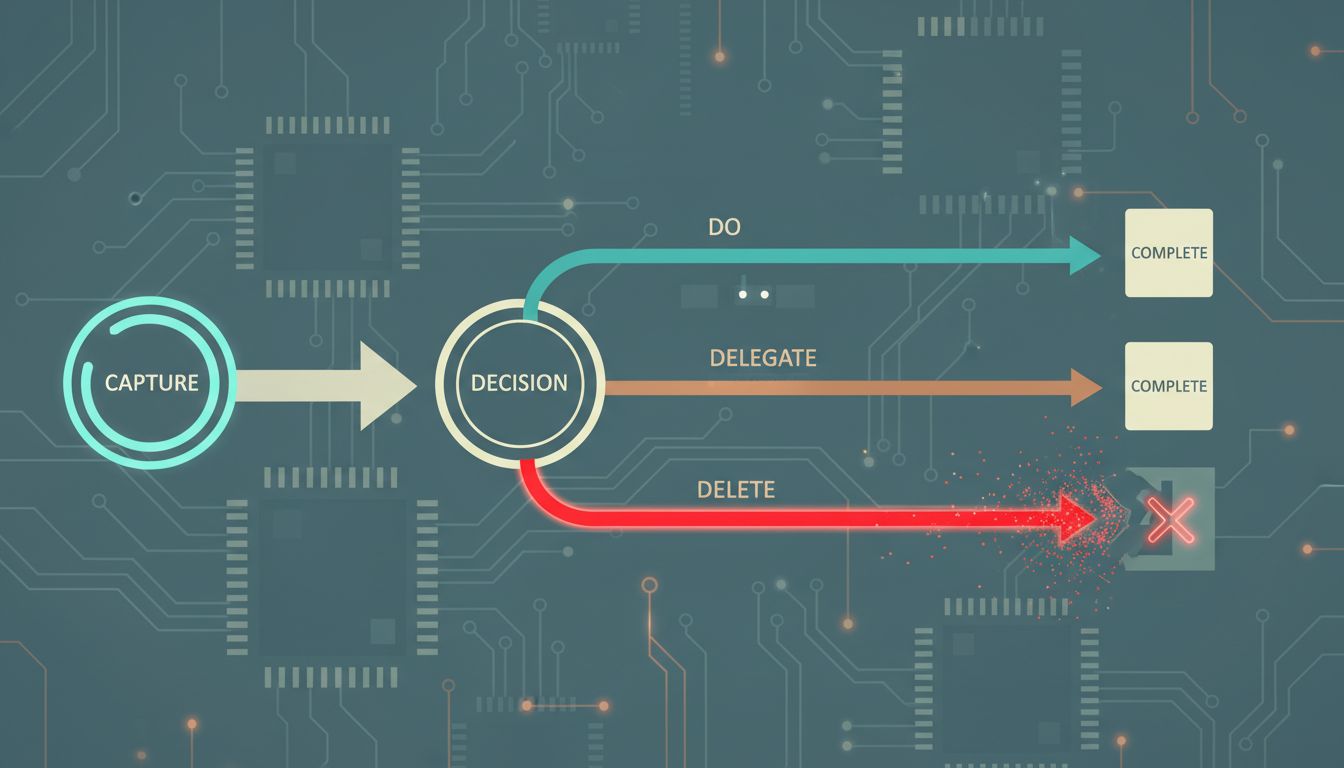
Here’s a framing I’ve found useful. For every item on your list, there are three honest answers:
- This needs to get done and I’m the right person to do it.
- This needs to get done but someone else should do it.
- This doesn’t actually need to get done.
Most to-do systems are built around answer one. They have no mechanism for surfacing answers two and three. So you end up with a list that’s genuinely complete (nothing forgotten) but fundamentally wrong (wrong mix of tasks, wrong owner, wrong level of effort).
The fix isn’t a better app. Apps optimize for capture and retrieval. The fix is a habit that runs orthogonal to the list: a regular session where you look at what’s accumulated and apply judgment rather than just processing. Not “did I finish this?” but “should this exist at all?”
This is uncomfortable because it means admitting that some of what you captured was never worth doing. But that discomfort is the point. A to-do list without a deletion practice is just a way of feeling organized while avoiding the harder question of whether you’re working on the right things.
How to fix it without throwing out the list
The to-do list is not the enemy. Capture is genuinely valuable. The problem is mistaking a capture tool for a decision-making tool.
The practical intervention is simple, though not easy. Separate capture from prioritization. Capture everything, freely, without judgment. Then, on a fixed cadence (daily for tactical stuff, weekly for larger items), run a separate pass with one question: does this belong here?
For that second pass, the Eisenhower Matrix is actually useful, not as a sorting mechanism but as a forcing function for honest deletion. If something has been sitting in “important but not urgent” for three weeks, it’s probably not important. If something is “urgent but not important,” it probably shouldn’t be on your personal list at all.
The goal isn’t a shorter list for its own sake. The goal is a list where every item, if you did nothing else, would represent genuine progress on something that matters. That’s a much harder list to build than one where you just write down everything that occurs to you. But it’s the one that actually solves your problem.