Bell Labs, between roughly 1925 and 1980, produced the transistor, the laser, information theory, Unix, and the C programming language. It collected more Nobel Prizes than most countries. And it did this with a workforce that, by today’s standards, looked almost irresponsibly unstructured.
No sprint planning. No focus blocks on shared calendars. No Slack status set to ‘deep work, do not disturb.’
This is worth sitting with, because the productivity conversation right now is dominated by the idea that the path to meaningful cognitive output is scheduling focused time. Block your calendar. Protect your mornings. Install an app that locks you out of social media from 9 to 11. The implicit theory is that deep work is a resource that gets depleted by interruption and replenished by deliberate protection.
That theory isn’t wrong, exactly. But it’s incomplete in a way that leads a lot of smart people to build elaborate systems that don’t actually produce better work.
The Setup
Jon Gertner’s book The Idea Factory reconstructed Bell Labs’ working culture in detail. What he found was that the Labs didn’t protect focus by isolating people. It did something more counterintuitive: it forced proximity.
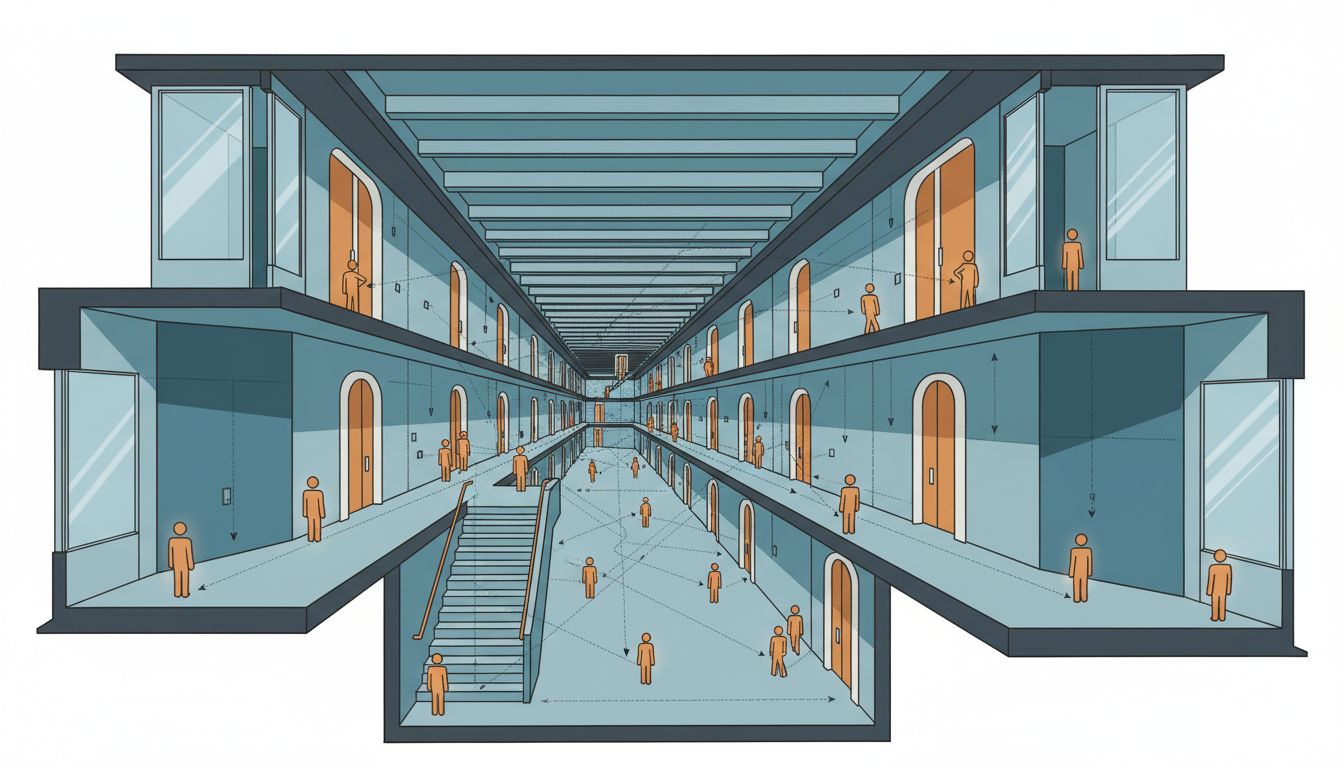
The main building in Murray Hill, New Jersey was designed so that everyone had to walk through shared corridors to get anywhere. Physicists bumped into chemists. Engineers ran into mathematicians. Claude Shannon, who essentially invented information theory while working there, was notorious for riding a unicycle through the halls and stopping to talk to anyone who caught his interest.
The Labs also gave researchers something almost no modern knowledge worker has: genuine unstructured time, with no expectation of immediate deliverables. William Shockley, Walter Brattain, and John Bardeen invented the transistor in 1947 not because they were assigned to do it but because they were given the latitude to follow a problem that seemed important.
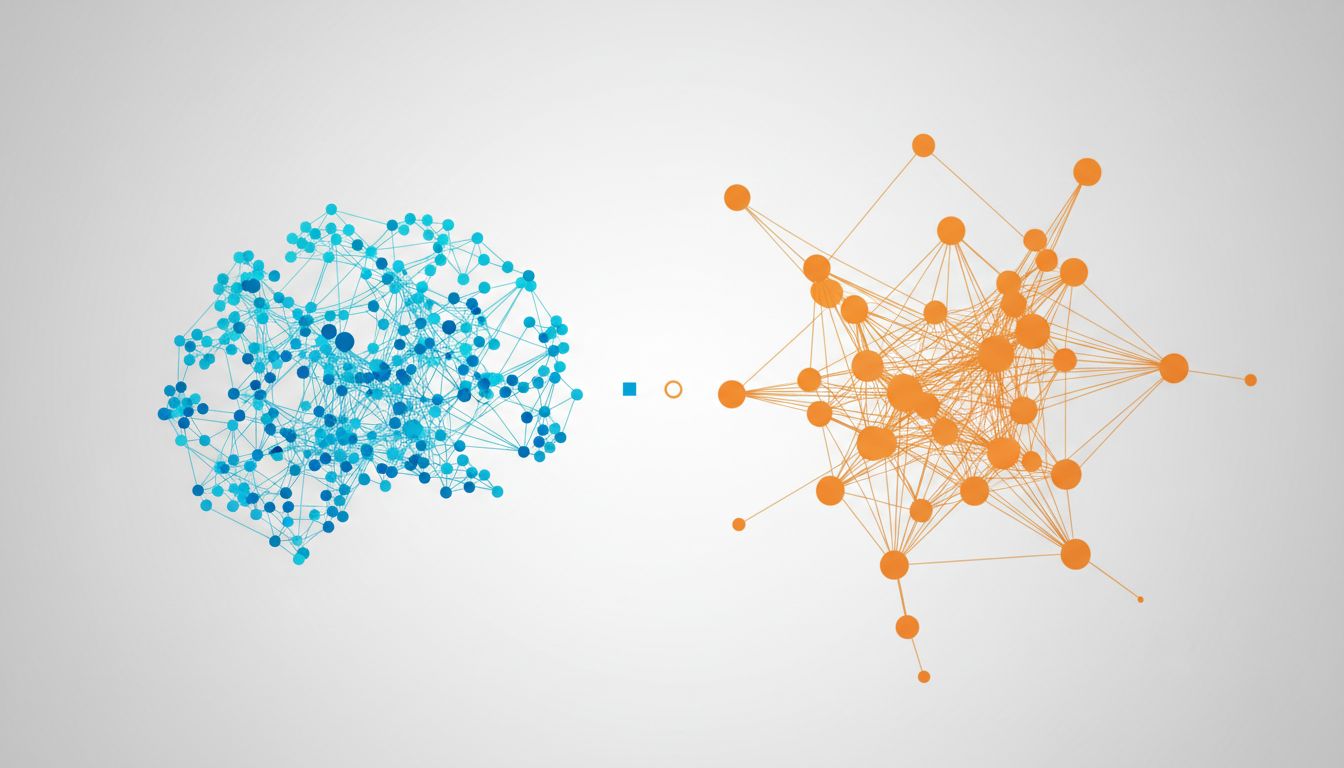
The management philosophy, articulated by research directors like Mervin Kelly, was that breakthrough work required two things that are almost never present at the same time in modern organizations: deep individual concentration and high-bandwidth, low-friction collaboration. Not alternating between them on a schedule. Both, simultaneously available, in a culture that normalized both.
What Actually Happens in Your Brain
Neuroscience gives us a useful frame here. The default mode network (DMN), a set of brain regions that activates when you’re not focused on an external task, is heavily involved in creative synthesis. When you’re in the shower, or walking, or staring at nothing, your DMN is doing something productive: connecting disparate ideas, running simulations, consolidating memory.
Deep work, as Cal Newport uses the term, is associated with a different state, sustained prefrontal engagement on a hard problem. Both states matter. The error is treating them as things you schedule rather than things you cultivate conditions for.
The people at Bell Labs weren’t scheduling their DMN time. They were embedded in a physical and cultural environment that made spontaneous synthesis more likely, that made the transition from idle conversation to focused work feel natural rather than like a gear-shift that required a calendar block.
When you read about what task-switching actually does to your focus, the damage isn’t just the interruption itself. It’s the recovery cost, the time it takes your prefrontal cortex to rebuild the context you were holding. Bell Labs reduced that cost not by eliminating interaction but by making interactions higher quality and more purposeful. Running into Shannon in the hallway and asking him a real question is different from a Slack ping asking if you’ve seen the latest email thread.
Why Most Scheduling Theater Fails
Here’s what happens when you block 9 to 11 on your calendar as deep work time and enforce it faithfully for a week.
You sit down. Your environment is the same environment where you normally do shallow work. Your body doesn’t know it’s supposed to be in a different mode. You spend twenty minutes fighting the pull of your inbox. You eventually get something like focus. Then at 10:47, someone knocks on your door or sends a message marked urgent, and you answer it because you’re a person with responsibilities, not a monk.
The schedule wasn’t the problem. The problem is that you tried to retrofit a behavioral change onto an unchanged environment and culture. Bell Labs didn’t ask its researchers to try harder to focus. It built a physical space and a social contract that made focus the path of least resistance.
You probably can’t redesign your office building. But you can make some of the same moves at a smaller scale.
What You Can Actually Do
First, audit what’s breaking your concentration and go upstream. If Slack is the problem, the answer isn’t a focus block, it’s a team conversation about response-time norms. Many organizations that have adopted explicit async communication agreements report less stress and no meaningful loss of coordination. The notification settings conversation is often a symptom of a deeper team contract that hasn’t been written down.
Second, think about your physical transitions. Bell Labs’ architecture forced researchers to encounter each other’s ideas. You can manufacture a version of this. Some of the best thinking happens when you physically move to a different location with a specific problem in mind, not to work, but to think. This is not scheduling deep work. It’s giving your DMN permission to do its job.
Third, and most practically: stop treating your task list as the unit of work to protect. The question isn’t ‘when will I do this task.’ The question is ‘what is the problem I’m actually trying to solve, and what does my brain need to solve it.’ Sometimes that’s two hours of uninterrupted coding. Sometimes it’s a ten-minute conversation with someone who knows something you don’t. Your to-do list is probably optimized for the wrong thing if it’s a list of tasks rather than a map of problems.
Fourth, take seriously the idea that collision is productive. The Bell Labs insight isn’t that people need more alone time. It’s that serendipitous, substantive interaction between people with different knowledge is itself a form of cognitive work. Your most valuable insight this month probably won’t come from a focus block. It’ll come from an unplanned conversation that you almost cut short because you were busy.
What We Can Learn
Bell Labs stopped being Bell Labs for a lot of reasons, most of them economic and regulatory. But while it lasted, it demonstrated something that the productivity-app industry would rather you not internalize: the conditions for exceptional cognitive output are mostly environmental and cultural, not individual and behavioral.
You can optimize your personal schedule all you like. If you’re embedded in a culture that treats all time as either meeting time or deliverable time, with no space for the kind of idle-but-alive mental state that produces real insight, the blocks on your calendar are decoration.
The practical takeaway isn’t to abandon structure. It’s to direct your optimization energy at the right layer. Fix the environment. Negotiate the culture. Then let the schedule follow from that, rather than using the schedule as a substitute for doing the harder work of changing the conditions.