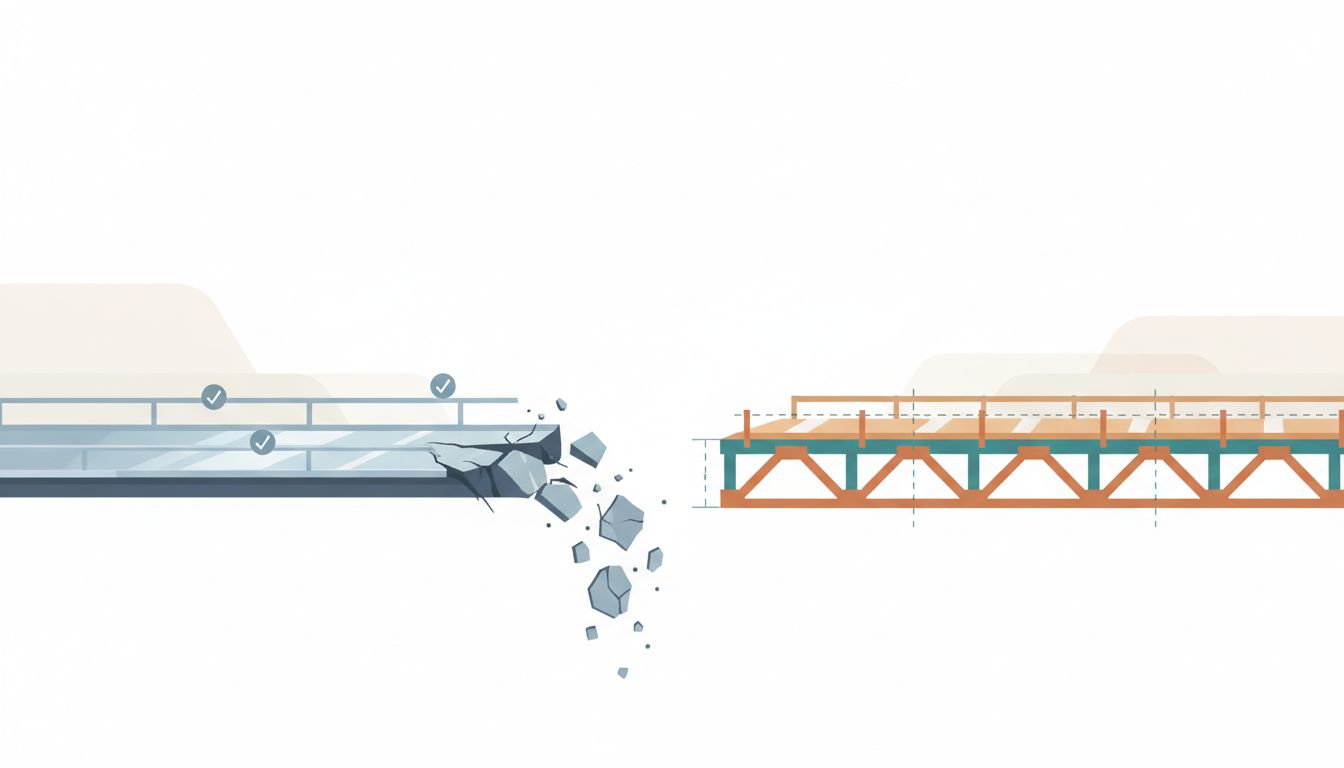
What Happens When the Clock Lies: The Distributed Systems Problem That Broke a Global Database
Time seems like the simplest thing a computer tracks. Google Spanner showed why it's actually the hardest, and what it took to get it right.
Microsoft invested in OpenAI. Google funded Anthropic. This looks like charity. It is the opposite.
Planned obsolescence in tech isn't negligence or short-termism. It's a precise, rational strategy that most companies execute deliberately and well.
The biggest winners in tech didn't satisfy existing demand. They manufactured awareness of a problem, then sold the solution.
Amazon, Google, and Apple don't price hardware to make money on hardware. Here's the actual business model hiding behind the discount.
SaaS companies don't charge per seat because it's simpler. They do it because it turns their customers into unwitting salespeople.
Google's famous free food program wasn't a perk. It was a calculated labor strategy that reshaped how the entire industry thinks about compensation.
Every time you switch tasks, a fragment of your attention stays stuck on what you just left. Tech companies have started designing work systems around this, and the results are uncomfortable to look at.
The sequence in which major platforms enter new geographies is a calculated playbook, not opportunism. Here's how it actually works.
Founders don't over-raise because they're bad at math. They over-raise because the funding round is doing a job that has nothing to do with building software.
Apple, Google, and Meta sit at the top of global market caps while owning a fraction of the physical assets of older industrial giants. The accounting explains why.
The losses aren't accidents or inefficiency. They're a deliberate land-grab financed by investors who understand exactly what they're buying.
The shower, the walk, the drive — these aren't interruptions to your thinking. They're where the actual thinking happens.
Protecting focused work time is not about work-life balance. It is a structural advantage that compounds over time and most companies are too afraid to claim it.
The 40% productivity penalty from multitasking is real, and the mechanism behind it explains why the fix is counterintuitive.
Synchronous communication feels productive but destroys the deep work that actually moves things forward. Here's the mechanics of why async wins.
Chronic multitasking doesn't just split your attention. It rewires how your brain handles focus, and the damage compounds over time.
Your calendar isn't a record of commitments. It's a program that runs your life. Here's what happens when you start treating it like one.
The biggest companies weren't built by following market research. They were built by founders who spotted friction before anyone had named it.
Join thousands of readers who get our weekly breakdown of the most important stories in technology.
Free forever. Unsubscribe anytime.