The Startup That Charges Too Little Dies Twice
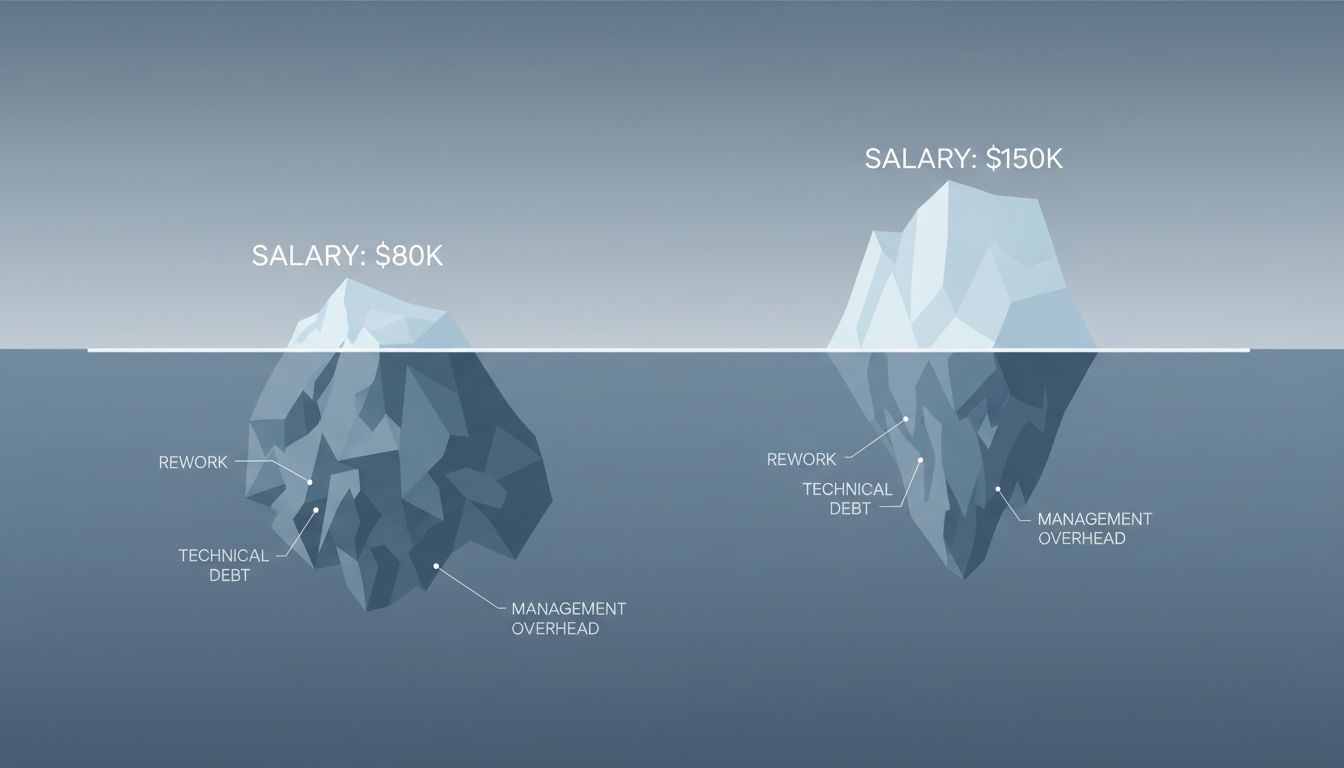
Pricing below your costs doesn't buy you time. It just makes you fail slowly, then suddenly, with a customer base you can't actually serve.
The real reason your new laptop runs old software sluggishly isn't hardware incompatibility. It's that abundant compute is an invitation to stop optimizing.
Confusing documentation, arbitrary rate limits, and broken free tiers aren't accidents. They're a sales funnel with extra steps.
Rebooting isn't a lazy fix. It's the most reliable solution to a class of problems that modern software engineering has largely decided not to solve.
Rubber duck debugging sounds like a programmer's folk remedy. It turns out to be one of the most reliable problem-solving techniques in software, and the reason why tells you something important about how expert cognition actually works.
A Google infrastructure study revealed something embarrassing: user stress is visible in battery telemetry. Here's the physics of why.
Your favorite apps load slower than they could. That's not negligence. It's a set of deliberate tradeoffs with a clear financial logic.
Loss leaders are how grocery stores move milk. In tech, they're how companies buy entire industries and lock out competition permanently.
The FBI's Sentinel project ran years late and hundreds of millions over budget. The reason wasn't bad engineers. It was a lie everyone agreed to tell.
Tech companies don't just slow old devices. They engineer upgrade pressure through software, security, and ecosystem design working in concert.
Digital minimalism isn't about doing less. It's a deliberate strategy that high-output professionals use to protect the kind of attention that actually produces results.
Your phone's calendar is technically more capable than any paper planner. It's also quietly training you to be late.
Using one email address for everything is like routing all your application traffic through a single untagged queue. The architecture is the problem.
The pattern isn't accidental. The founders who build category-defining companies aren't predicting the future. They're building the conditions that make the problem visible.
Strategic ignorance isn't carelessness. It's the deliberate refusal to internalize the assumptions that keep incumbents stuck.
The doomed product launch isn't incompetence. It's a business strategy with real returns — if you know what you're actually buying.
The companies that eventually raised big rounds often spent year one doing things no VC would touch. That wasn't an accident.
Zombie features aren't bugs or oversights. They're deliberate instruments for nudging user behavior in ways that never show up in a changelog.
Every bug fix is a trade-off. Understanding why complexity migrates instead of disappearing will change how you write, review, and ship code.
Join thousands of readers who get our weekly breakdown of the most important stories in technology.
Free forever. Unsubscribe anytime.